How not to do a PhD…

Please note, I’m not even half a year into my PhD.

  1. Remote studying.
  2. Puppy.
  3. Job resignation.
  4. Massive illness.
  5. Illness-related inhibiting injury.
  6. Strike action.
  7. Global pandemic.
  8. 12 week isolation period.

Remote studying

It. Is. Hard. I already knew this as I undertook the MA as a distance learner over two years. But this time around it’s harder and it has taken me a while to put my finger on why. Firstly, the distance learning course is (naturally) geared to distance learners: all the resources and opportunities were accessible. Secondly, everyone else on the course was in the same boat and, over time, connections were made. Even though I was hundreds of miles away – thousands in some cases – from other learners, we shared ideas, chatted, attended lectures together, proof-read each other’s work and moaned / laughed / vented about the same things. With the PhD, there are other remote learners but we’re not as well connected. There are opportunities for us to join in with CPD and learning experiences but not everything is set up for us; there have been frequent activities I’ve wanted to attend but they were on campus only. The school I’m in is excellent and very thoughtful in terms of its remote students – everything they offer is mindful of those of us who are not on site – but the wider opportunities across the faculty, University or partner organisations are not always available. And I can’t afford to keep dashing up to Sheffield because I think a 2 hour activity will be beneficial: petrol, hotel, food, doggy daycare. Thirdly, I’m not able to work in the labs Monday to Friday, nine-to-five, which automatically lends a certain structure to the week and a sense of I-have-got-to-get-on-with-work-and-put-my-phone-down-because-the-other-researchers-can-see-I-am-not-being-productive. I thrive on that kind of intrinsic guilt. Finally, no matter how much I try to stay on top of emails and notifications, I have a feeling of being disconnected or of missing out on things that perhaps I would have noticed by simply occupying the same space as the other students and researchers in my school.

To mitigate how I was feeling, I started working in the library of my local university once a week (and, after I quit my job, three times a week). This gave me the structure, uninterrupted study time and sense of I-have-got-to-get-on-with-work-and-put-my-phone-down-because-the-other-students-can-see-I-am-not-being-productive-and-I-have-paid-a-fortune-to-be-here-in-carpark-fees-and-doggy-daycare.

I also began an online course offered by the University’s English Language Teaching Centre called Online Thesis Writing Course. It’s specifically for remote students and those who are on-campus are firmly told to attend the face-to-face sessions instead. I’m halfway through the course which delivers all the basics you need to know to build a thesis, including those aspects you felt too stupid to ask about. There are weekly compulsory tasks, assessed homework every two weeks and a final assignment which entails submitting a chapter or part of a chapter for critical guidance. As a completer-finisher, this has motivated me to undertake a lot of work that I was finding too vague and scary: I’ve clarified my aims; I’ve refined my research questions; I’ve drawn a physical plan of how my intended methodology will meet these aims and seek to answer the research questions; I’ve started a reading plan, now I actually know what a reading plan is; and I’ve thought about the overall structure of my thesis.

To tackle sense of being lost, I’ve started to use more organising functions to keep on track of information, ideas and messages: sub-folders within my internet bookmarks, Google Workspaces on my Google Drive, bookmarking on Twitter when I see something of note, a to-be-read document of materials I’ve encountered but haven’t yet had time to deal with, more sub-folders with my emails and an interactive, prettified to-do list on a Google Sheets.
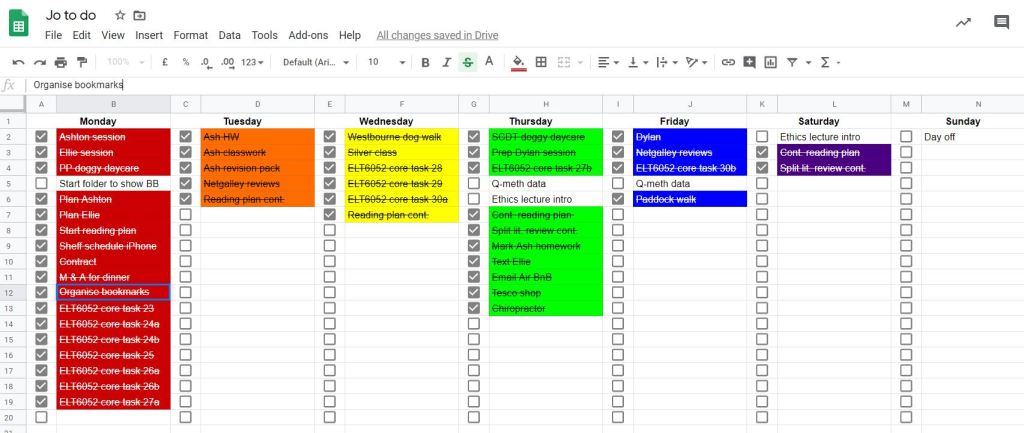
Rainbow list – you can see I’ve been putting off the ethics lecture!

I’ve found an affordable Air BnB near the University, which also has free parking and WiFi, so I can make my trips up north more affordable. (Side note: clearly, this is now on hold.)

Puppy

Ok. This one is my fault. I wanted a puppy. I got a puppy. I knew a puppy would be hard work.

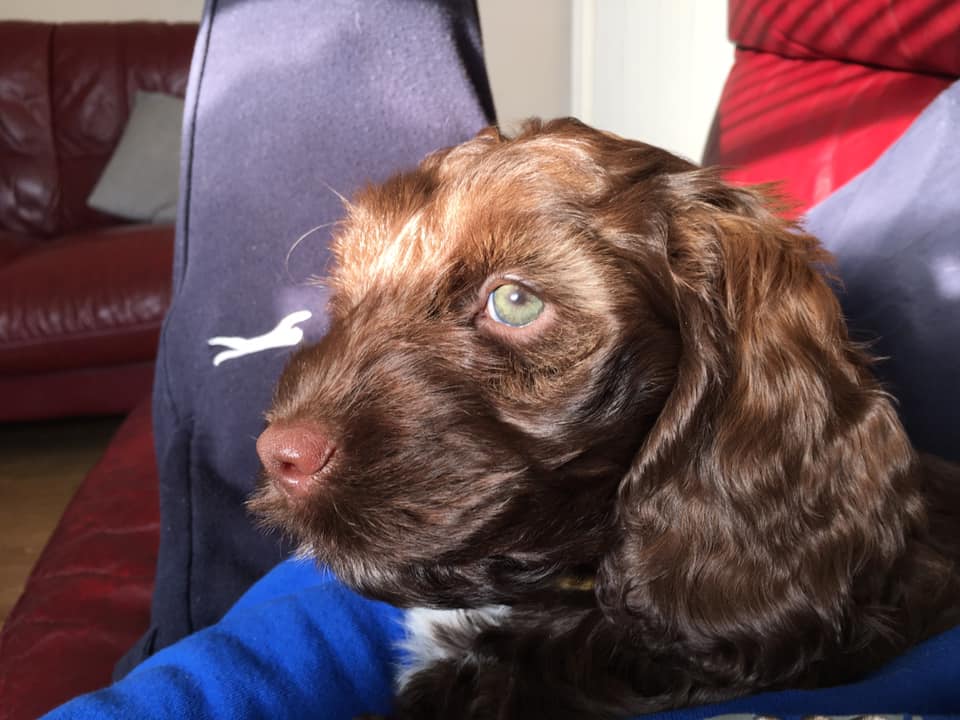
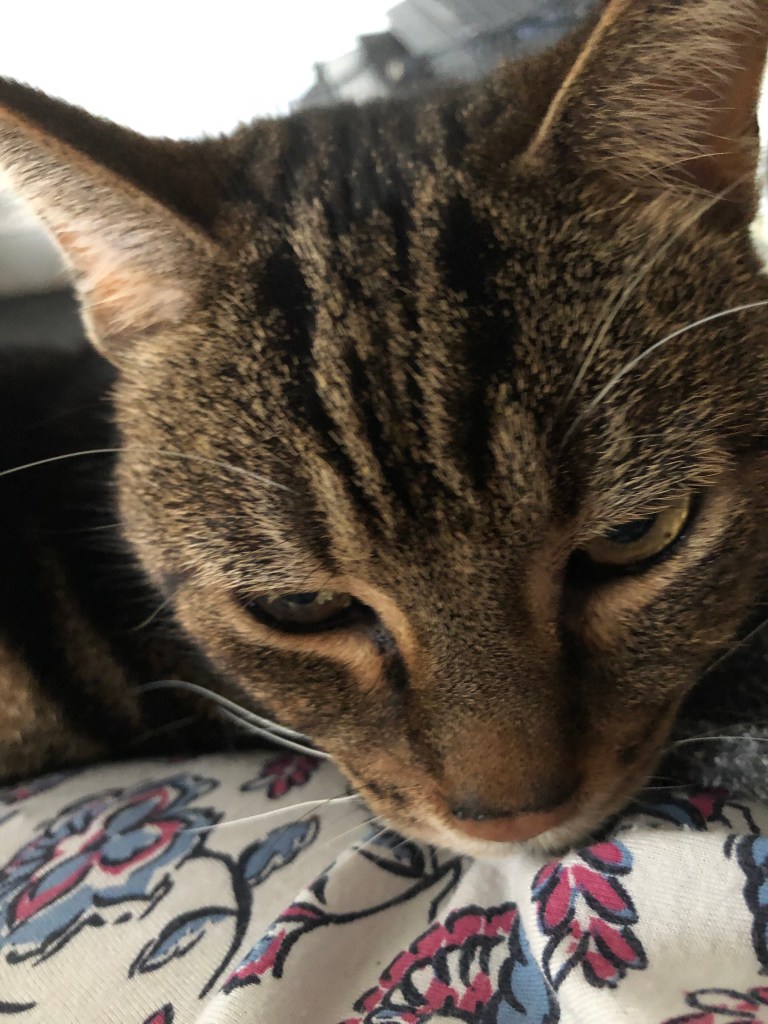
The puppy is cute. The puppy is also, predictably, hard work. I think I mentioned that already. She arrived in November, essentially 5 weeks after I started the PhD. Anyone who has had the pleasure of a puppy will know their needs are constant and not conducive to long bouts of intensive study (on my part).
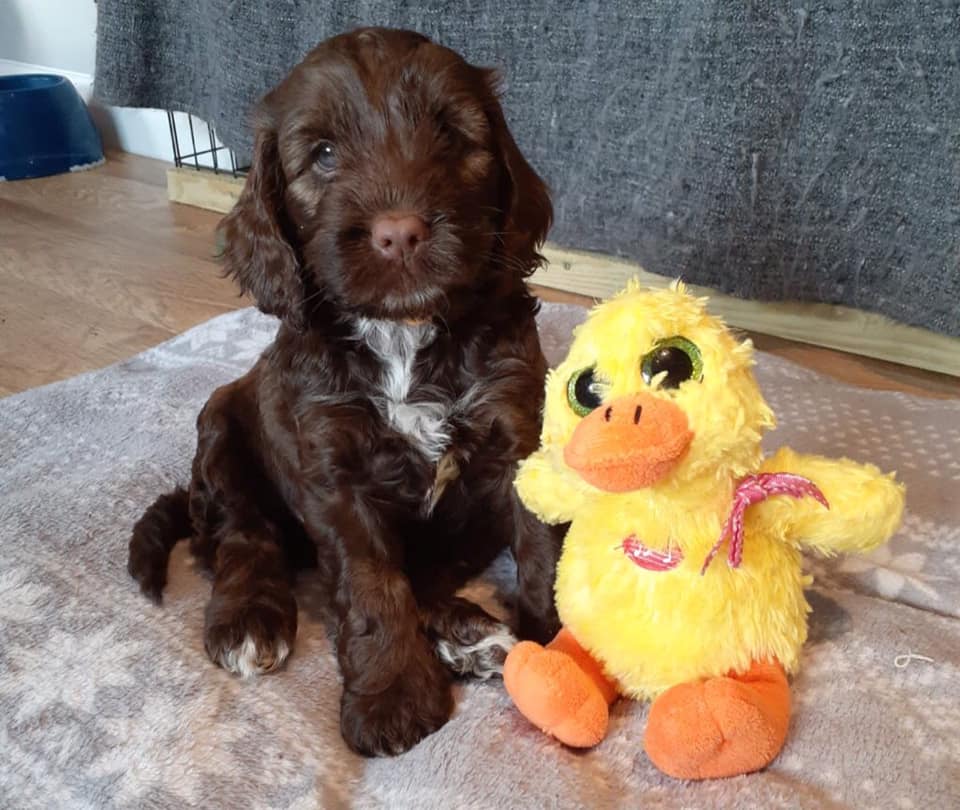
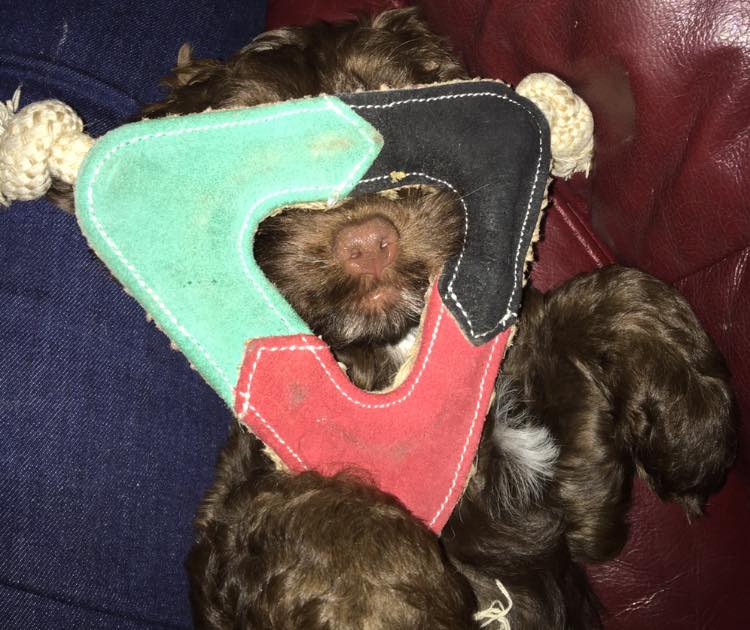
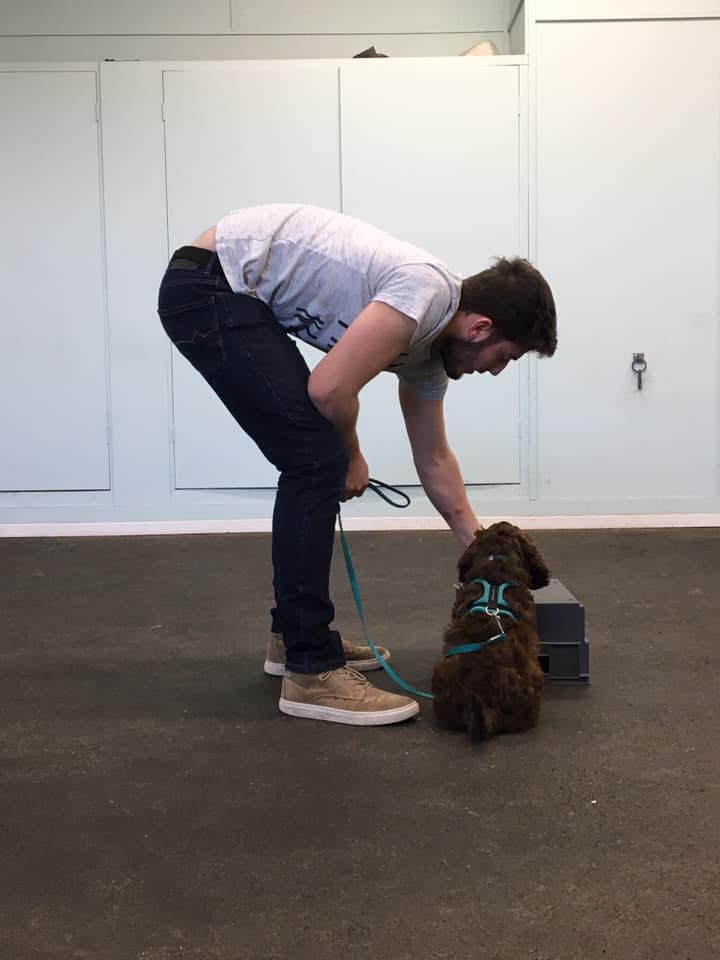
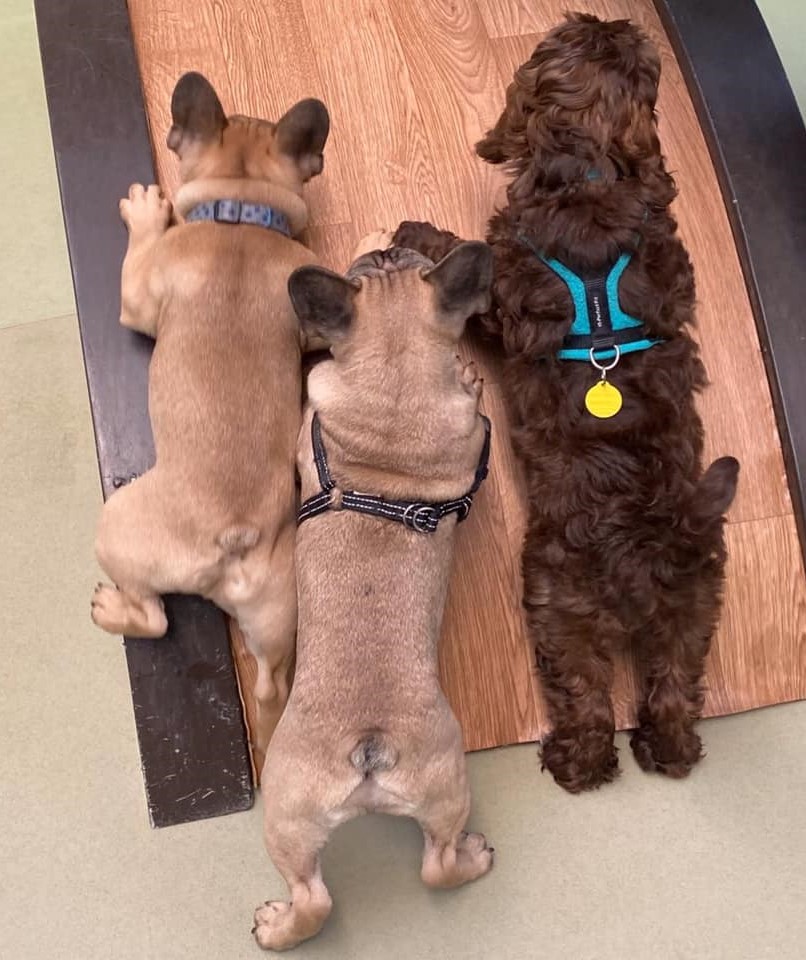
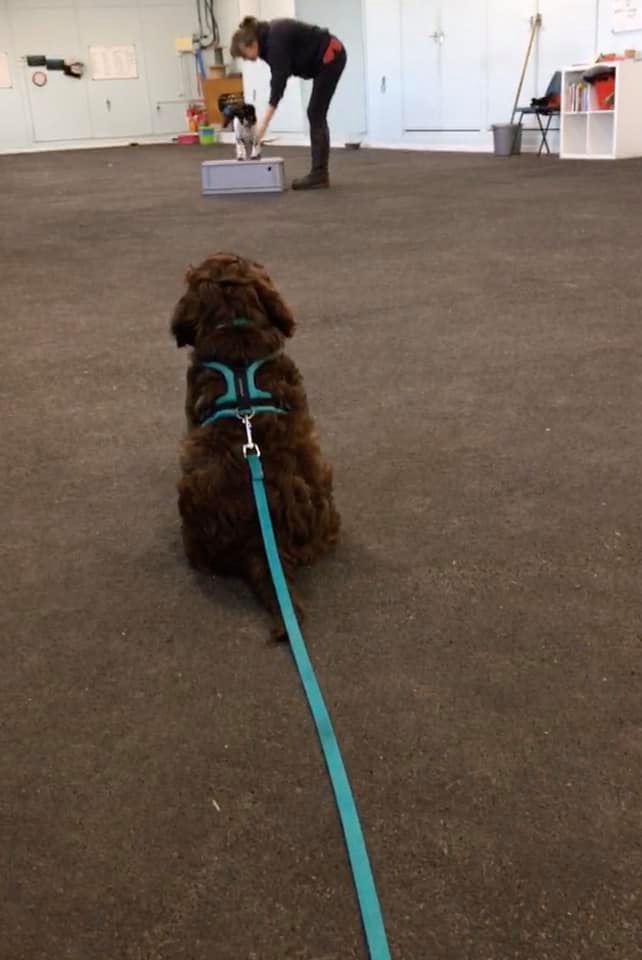
She has taken really well to training and was doing well with crate training until she developed a bit of nervous anxiety: bangs, the door opening, keys in the door, people walking by the window, her own face in anything reflective all cause her to defensively bark. We think the terrible storms triggered this and we’re working to correct the behaviour. She is a super sociable dog and loves nothing better than doggy daycare… which meant that I used such facilities twice a week to carve out study time for me. I also enlisted the man-child to have sole responsibility for her one day a week; initially, this meant I could go to work and, latterly, it gave me a third day of study. We’ve also had three separate bouts of puppy poorliness which have meant she’s had to stay home to get better and, thus, slowed my studies.

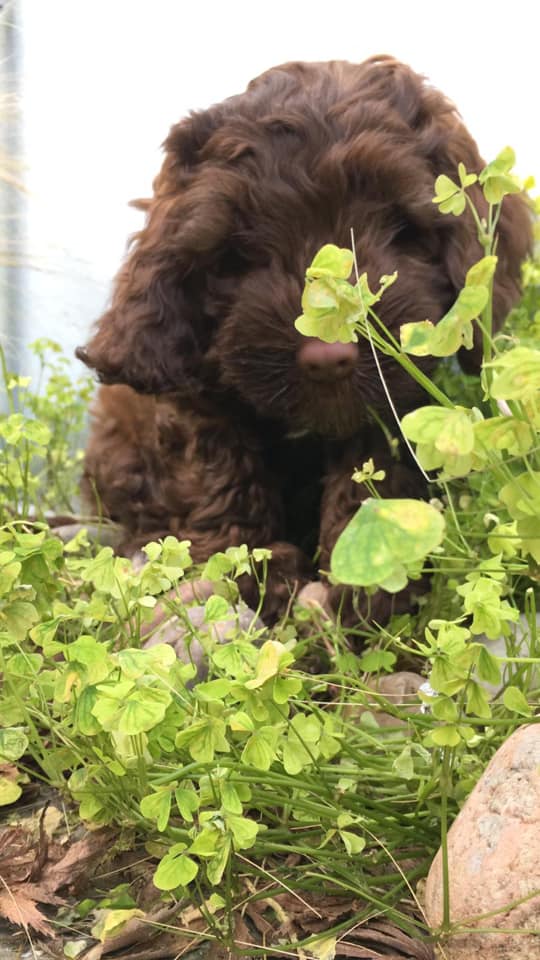
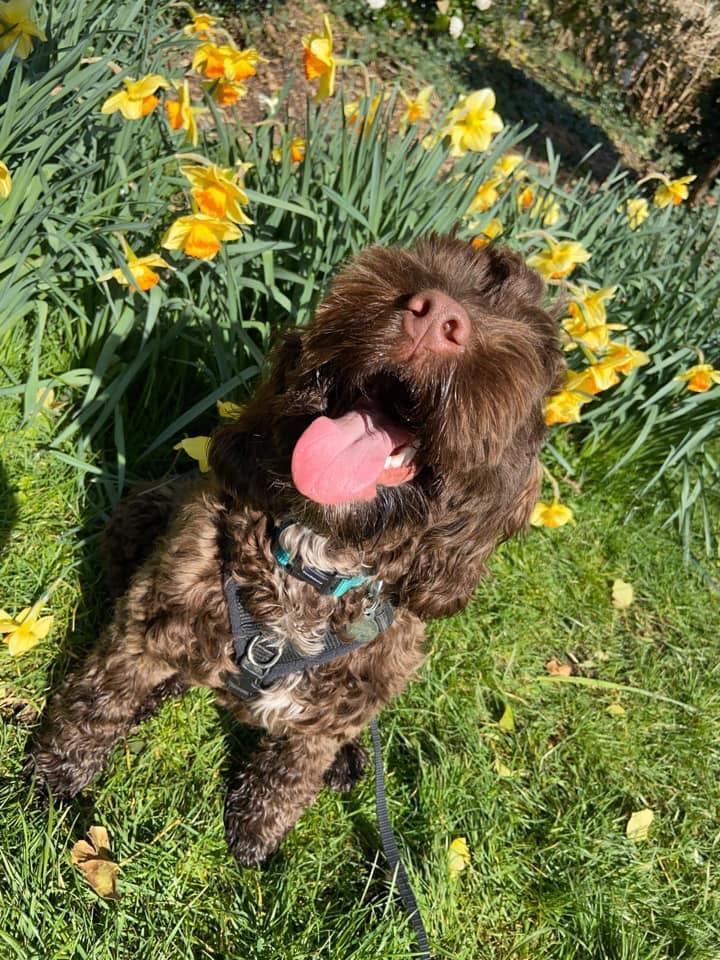
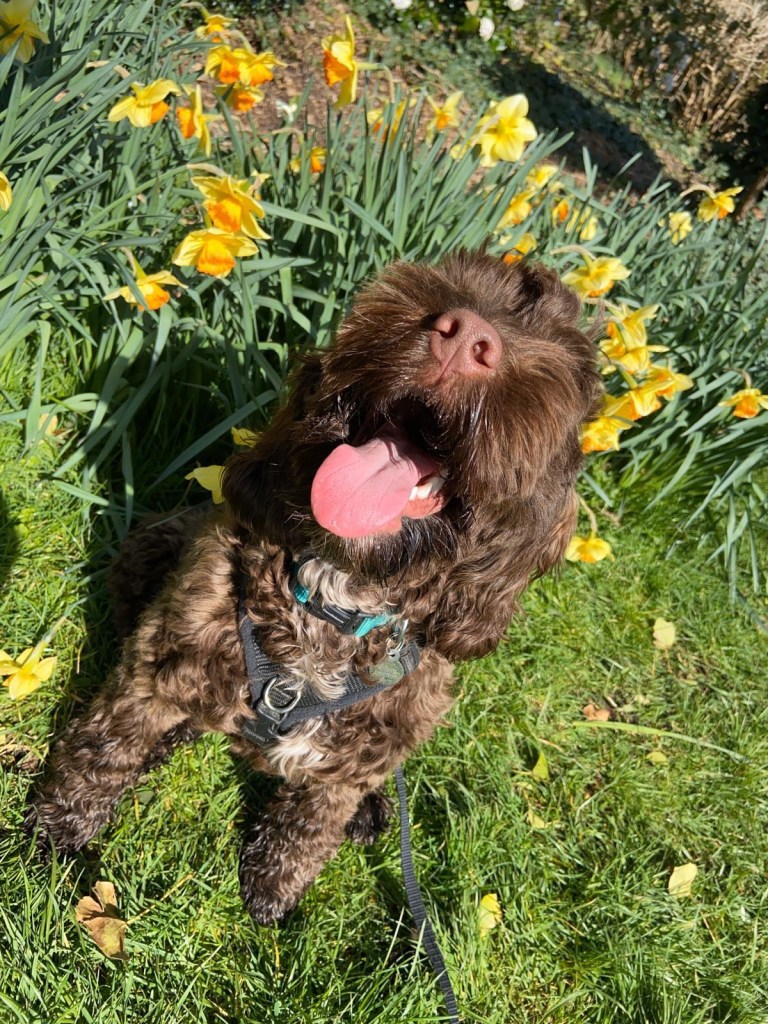
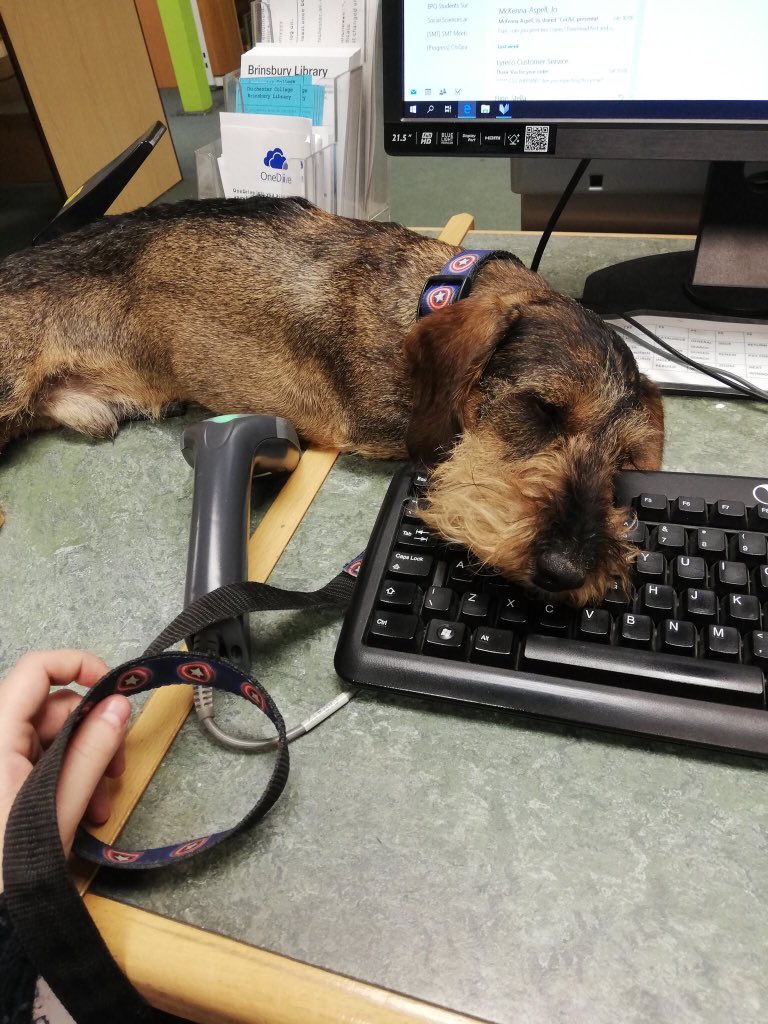
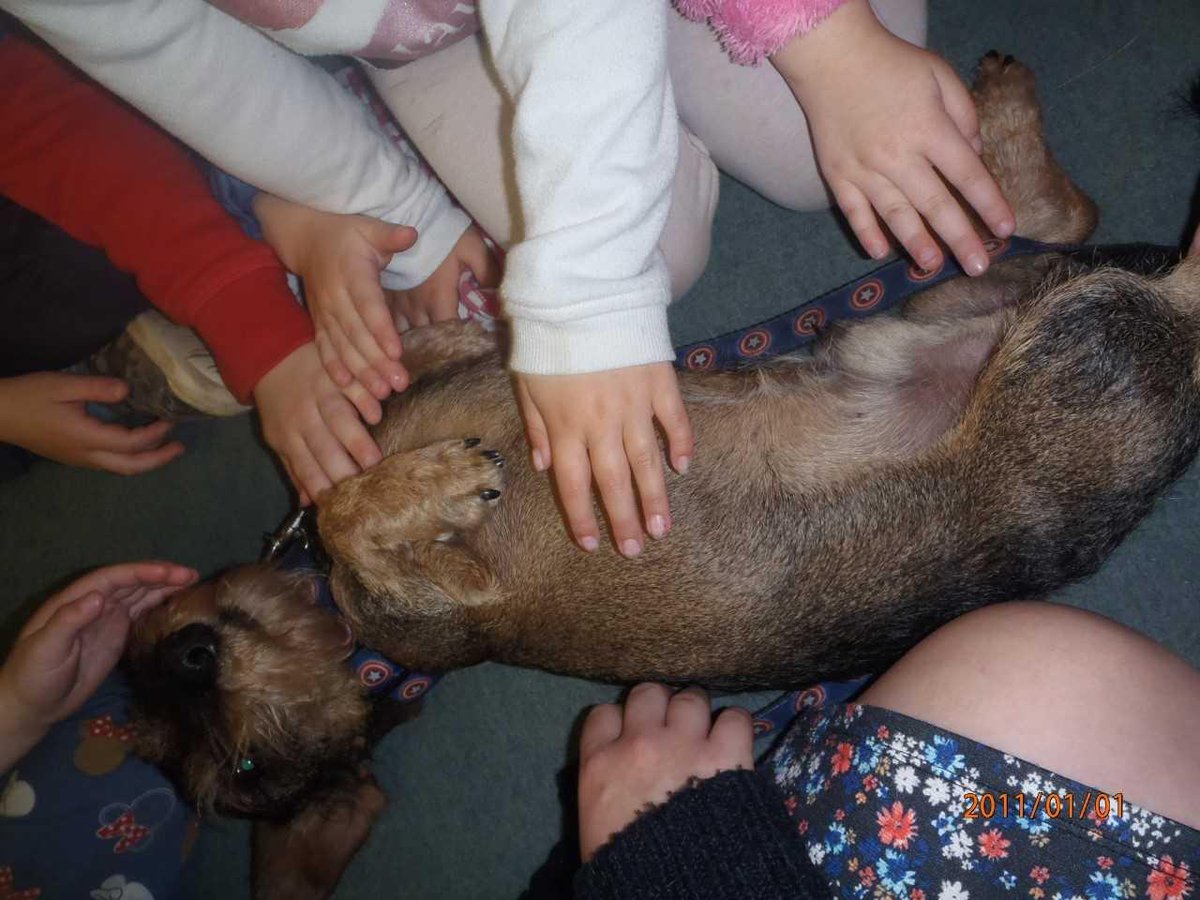
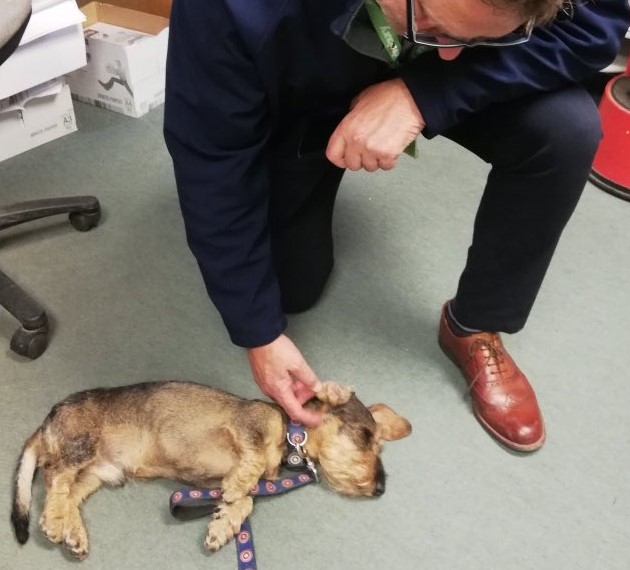
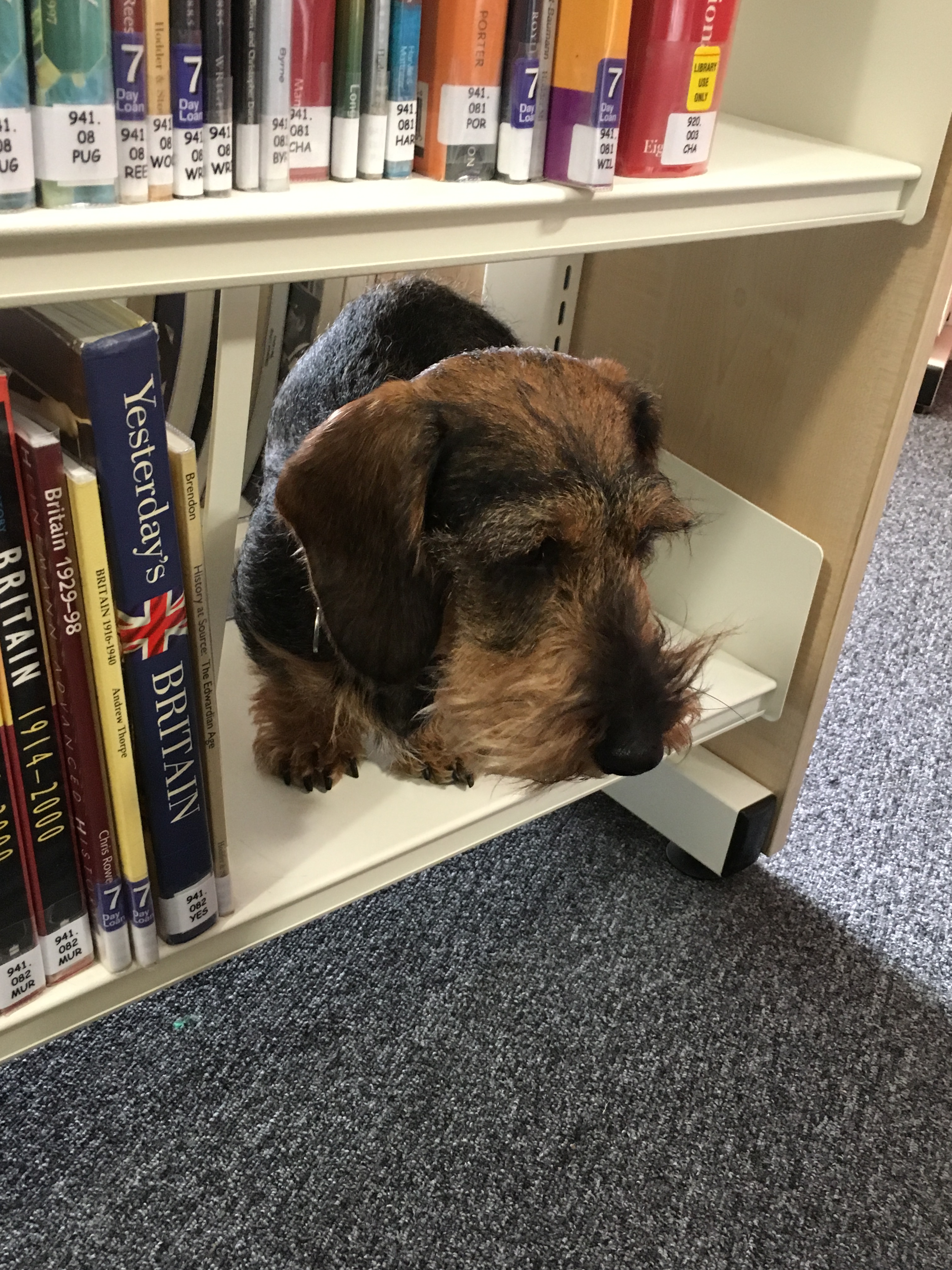
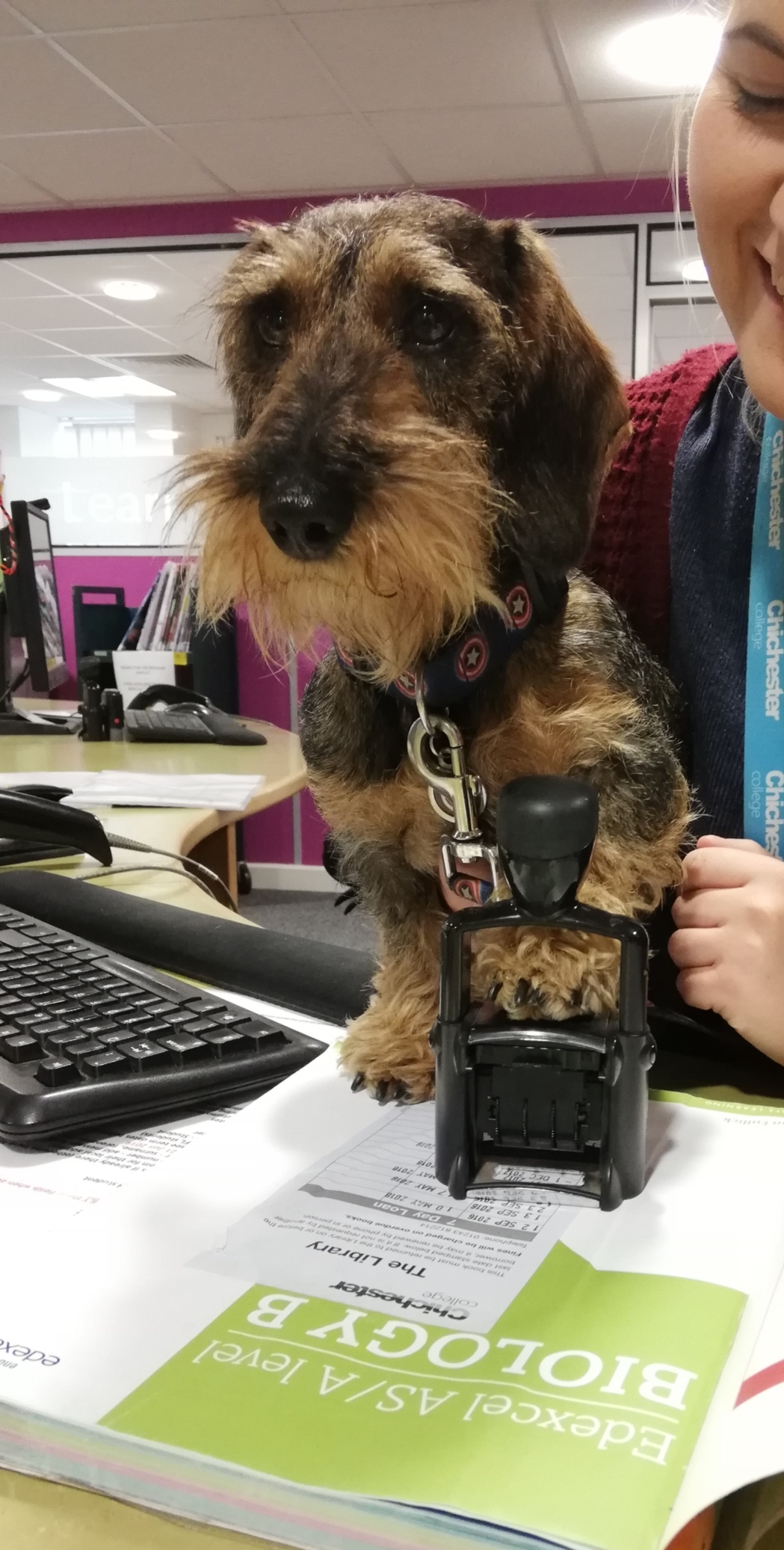
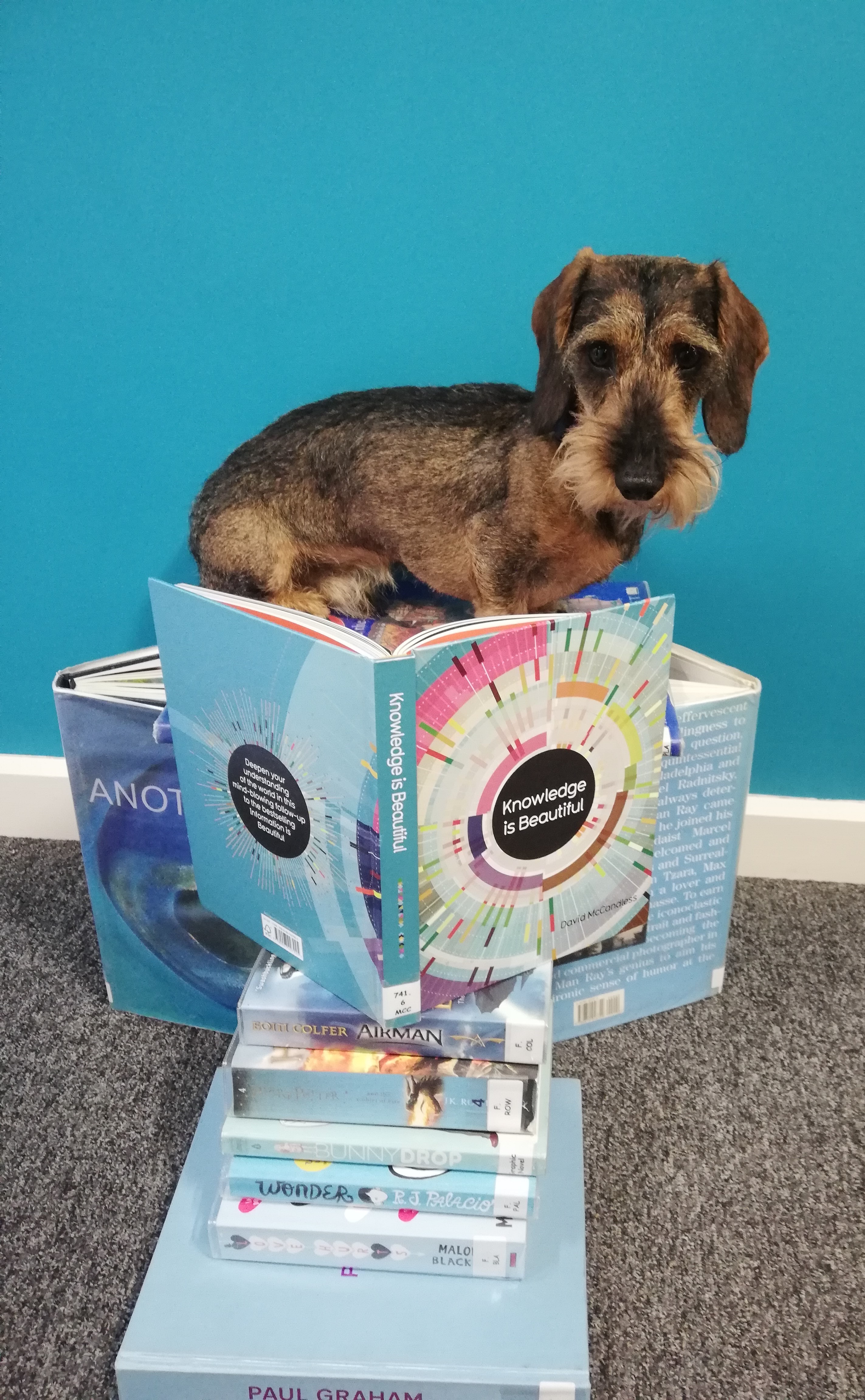
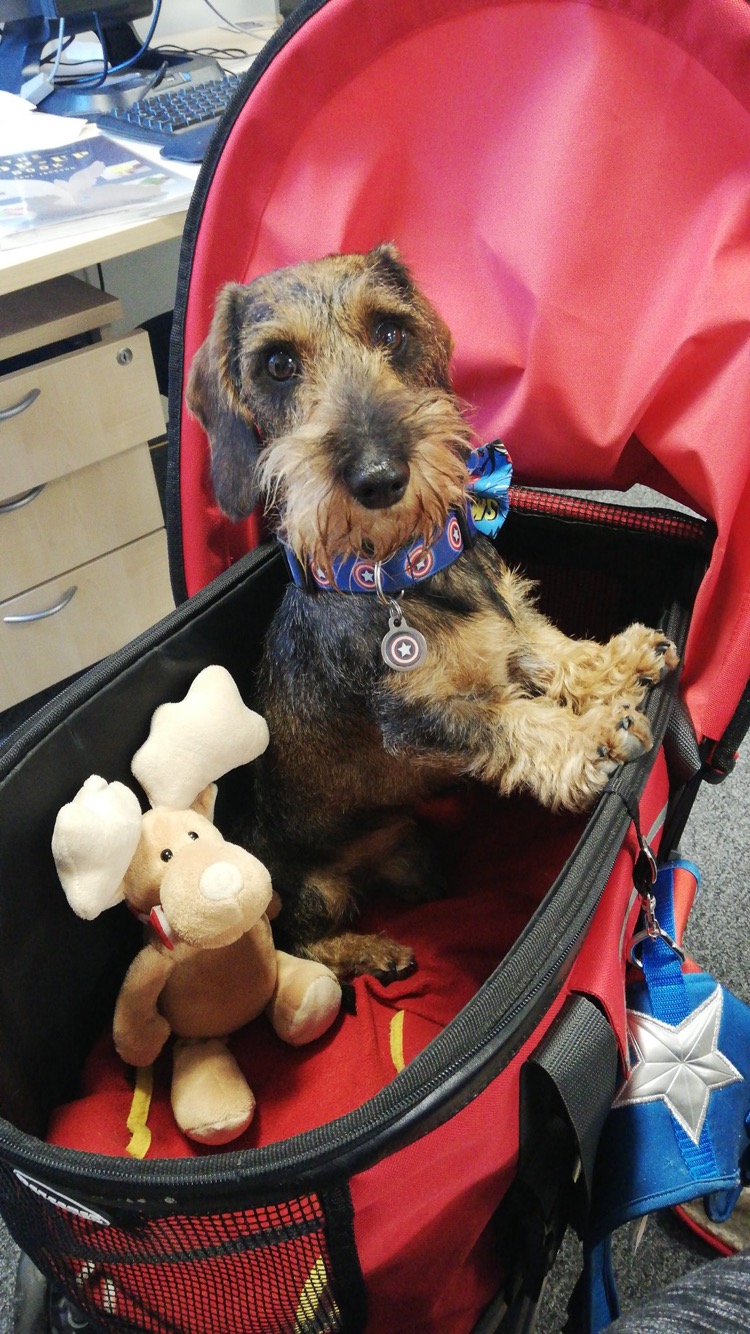
Here, more puppy photos because why not.
Job resignation

I loved my job. I love the people and the place. But in the lead up to Christmas, it was fast becoming apparent that I couldn’t balance the inflexibility of work with PhD needs. It meant that I was missing out on digital and on campus opportunities because they clashed with work days and I was struggling to find work-life balance with my family because I had to study solidly at weekends to make up for working in the week. Having completed a crazy, two year MA, alongside working and the annual pressures of long exam marking cycles, I owed it to my wife to make an effort to be present some of the time! I had a choice to make: puppy, family, PhD, work. I couldn’t do them all and only one of them could really be removed from the equation.

I gave a long resignation period and planned to leave at February half term.

This risked having a negative impact on my study because it dried up my cash-flow. In essence, my tiny salary was paying for my petrol and the doggy daycare. Without it, I would lose the two, uninterrupted study days I’d created. This lead me to look for more flexible income streams and I took up tutoring with a company that enables the use of an online platform. After the cut this organisation takes, the three students I took on covered my doggy daycare, petrol and parking.

Massive illness

Straight after my mid-January MA graduation (as in, literally the next day), I was struck down with norovirus. This was diagnosed by 111 remotely. Dear Goddess, I thought I was dying. Bodily fluids aside (no one wants to hear about that), I also had a raging fever for two days and a cough that lasted over 7 weeks. I must have taken half a dozen different cough medications, after speaking to the pharmacist. Nothing worked. It was the kind of cough that meant I often couldn’t actually catch my breath, walk very far or go up the stairs. I couldn’t sleep flat, so I’ve been on the sofa since then (see numbers 5, 7 and 8 for why I’m still on the sofa now). Being sick and coughing for so long meant I also pulled muscles around my rib cage so I was also even wonkier than normal. Do any of the symptoms sound familiar? The household and I are now wondering if I had undiagnosed Coronavirus. I hope not as I went back to work after 5 days. (EDIT: I had an antibody test in August which was negative for Covid-19… so this was either flu or a standard norovirus).

Naturally, this illness really knocked my productivity. I was exhausted, unmotivated and uncomfortable at a desk for any length of time. I had no idea it was going to persist for this long so I didn’t bother applying for a leave of absence (our equivalent of sick leave). It’s the end of March now and I’m still tired and coughing occasionally.

Illness-related inhibiting injury

Week four of my cough brought with it some additional muscle / rib cage issues. I happened to cough, whilst getting out of the car, after my very last day at work. I felt something go down my right side and assumed I’d pulled a muscle. From then on, when coughing, it felt as through someone was lancing me with a hot blade. I didn’t want to take my cough to the GP and spread it about so I rang 111 who suggested painkillers, ice and heat on rotation. Plus holding a cushion or similar to my side when I needed to cough (as if I was going to go everywhere with a cushion handy, just in case). I took things easy for the rest of the week but my wife will tell you that my definition of take it easy isn’t actually resting up. I still did puppy classes, went on walks, popped back to work to say goodbye to folks and introduce them to the puppy, studied at a desk and so on. I just didn’t lift anything up.

By the following week, it was feeling much improved but the puppy had started her aforementioned third illness: blood in her stool. As I was gearing her up for an early morning vet visit, something literally popped on my right side. I screamed. And found I couldn’t move. It took me 15 minutes to get movement back and I somehow managed to get the puppy into the car (crying the whole time), drive to the vet (crying the whole time) and into the surgery (still crying). I asked my wife, who was on a train, to ring and make a GP appointment for me. We’ve not long been with this vet and I’m not sure they knew what to make of me and the state I was in. Anyway, they took over with the puppy, treated her and put her back in the car for me. Again, I somehow managed to drive home (still crying, in case you’re wondering) and back into the house. The second pop happened as I lowered myself into a tub chair in our dining room. (Crying.) A little while later, it became apparent that I could no longer move; I couldn’t get out of the chair. In a way, it was good the puppy was so poorly. This was 9.30 a.m. and she essentially stayed by my feet all day. My wife was in a meeting in London, unreachable, and the man-child was in Hereford. I sat (crying) staring at the dining room clock for three hours. My cough was still present but I couldn’t bear the pain of coughing, so most of the time I was humming and growling to try to suppress it; as you can imagine, this was alarming the puppy and the dog! After three hours of this, my body took over and coughed without my permission. Three things happened simultaneously: immediate relief as I brought up phlegm, the third and most brutal pop, and I blacked out. I only know I had fainted because I woke up with my face on the dining room table and both dogs trying to jump up at me. The pain in my side was searing and the spasms flared every few minutes. I rang the GP to explain that there was no way I could get out of the chair, let alone to the surgery for the afternoon appointment my wife had secured. The receptionists at our surgery are infamous for their dire bedside manner but my hysterical crying clearly elicited a sympathetic response. At 3.30 p.m., I had a telephone consultation and the GP diagnosed a likely intercostal tear. He prescribed me all the meds and asked if I could get someone to pick them up.

In the end, I emailed my Mum at work because she doesn’t look at her phone whilst she is at her desk. By 5.30 p.m., I was dosed up on painkillers, muscle relaxants and anti-inflammatories. I definitely scared my Mum as she’s never seen me in a state like that before. Also, the wife felt terrible as she’d been inaccessible all day.

Having quit my job so that I could focus on my studies, I spent the next few days sleeping in a chair and unable to be at a desk. What is up with that, Universe? When I was up to it, I made it to my chiropractor who confirmed the torn muscle but also diagnosed that the popping was a herniated thoracic disc… which explains the slow recovery. Up to 12 weeks. As the rest of the household now has to carry the weight of domestic tasks, I’m considering it payback for the litany of surgeries and acute illnesses the wife, man-child, dog and puppy have endured over the last decade, causing me to play the role of benevolent nurse at least once a year.

A recap: I first became ill on January 15th. Today is March 30th and my back still isn’t 100% and I have to study in short bursts. I’m still on the sofa because I can’t bear to lie completely flat. I’ve been battling with my health for nearly 11 weeks now. I don’t have a full GP record of this as I used 111 and pharmacists – I managed to acquire a med cert for 2 weeks of my troubles but not enough to really apply for a retrospective leave of absence. Plus, I decided that I’d rather power on and catch up rather than pushing back my first year deadline. Also, as someone who is self-financed through the delightful and empathetic (!) Student Loans Company / SFE, I don’t want to do anything with deregistering and reregistering that could mean my finances are fudged. I’ve been burned by them before, during my undergraduate degree.

Strike action

Please note that I wholeheartedly support the strike action by HE staff this year; these comments only pertain to my own experience as a student. I’m lucky that these were only a minor irritant: it meant some of our planned sessions were cancelled or postponed and it also meant I couldn’t reach out to staff when I had questions. Spread over 4 weeks, the strikes just meant I felt a little disconnected again but by this point I was working on the online course I mentioned above so I was fully occupied.

Overall, as this overlapped with my illness, quitting work and my injury, it just felt like are-you-kidding-me-another-thing?!

Global pandemic

Clearly this has now affected everyone and, as I’ve written before, I know many other people have it a lot worse than I do.

Initially, it was small things. The University pulled face-to-face teaching. Ok, I’m working remotely but I had booked and paid for a week in Sheffield using Air BnB so I could attend a range of lectures, meetings and events. It was to be the first time I could spend a prolonged period of time immersing myself in PhD life. I’m lucky that Air BnB told everyone to issue refunds (which I’ve now spent on loo roll and dog food).

Then the universities started to close their campuses, which meant I could no longer work at the local university’s library. Next, the schools and colleges closed and exams were cancelled, so I lost 2/3 of my tutees. Yes, I miss the income but I’m also gutted for them as they were making brilliant progress and would have far outperformed the predictions the schools will now have to provide the DfE. Doggy daycare facilities remained open but for the sole use of key workers, puppy classes became 1-2-1s and then stopped altogether. The University stopped its library postal service. My wife began working from home (she has severe asthma) and the man-child’s college and workplace both closed. Boom. Suddenly they were both here 24/7, as was the puppy.

We had some food in the house but none of the important things: wine, chocolate, biscuits.

Studying (as the country was gradually shutting down and universities were playing catch-up with digital delivery) was a bit weird.

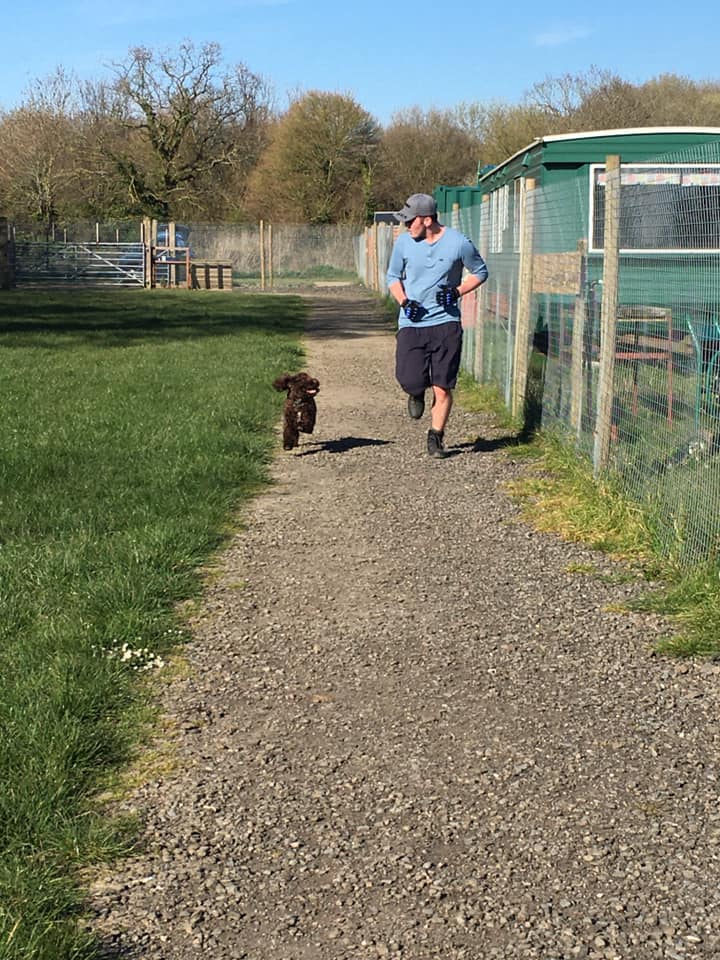
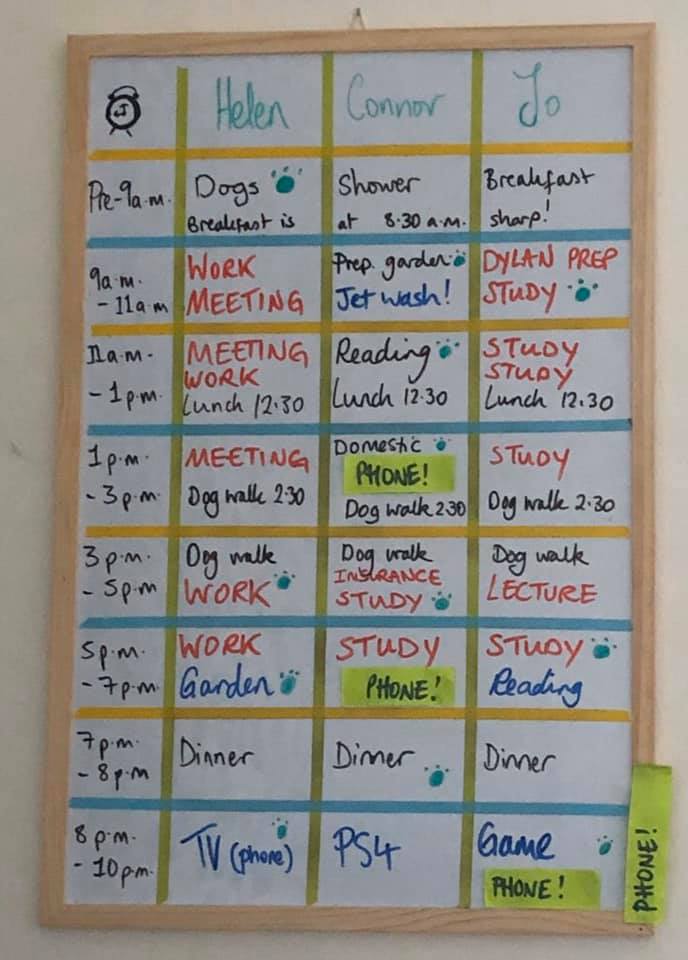
March 24th brought a national lockdown; by this point, we had already been isolating for 5 days. We had a daily schedule as my wife tried to work, I tried to study and the man-child tried to write college assignments (BTEC, so it’s still go-go-go for him). We were initially using local dog walking paddocks because they guaranteed no contact with anyone else. The sunshine helped as we sorted the garden, soaked up the rays, baked and had some quality time together. It was easier for the man-child after the 24th because it meant all his friends were in the same boat.
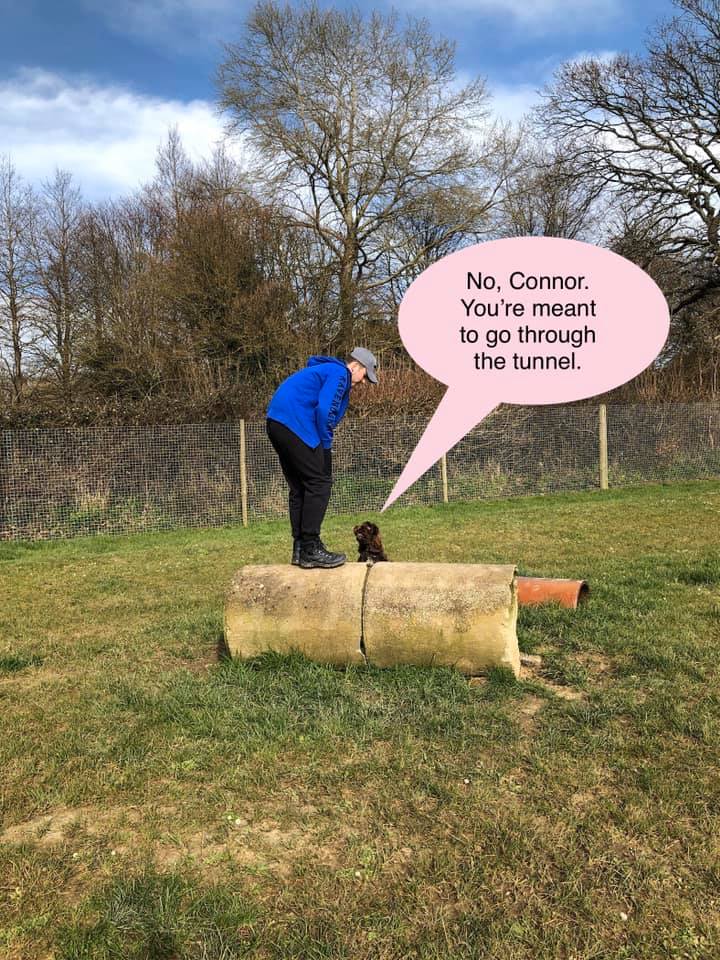
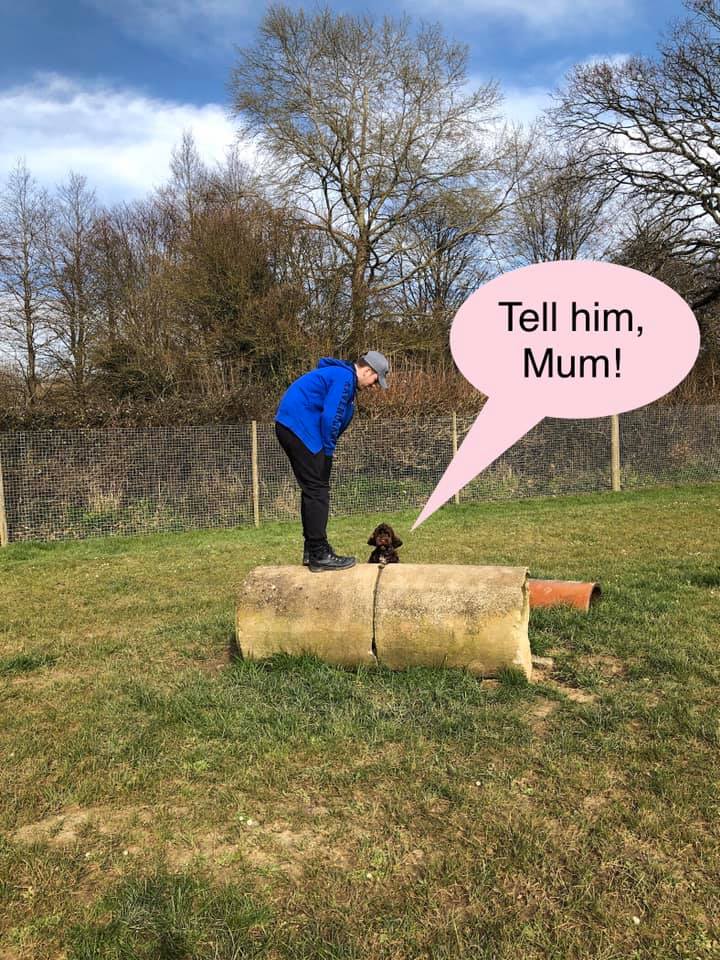
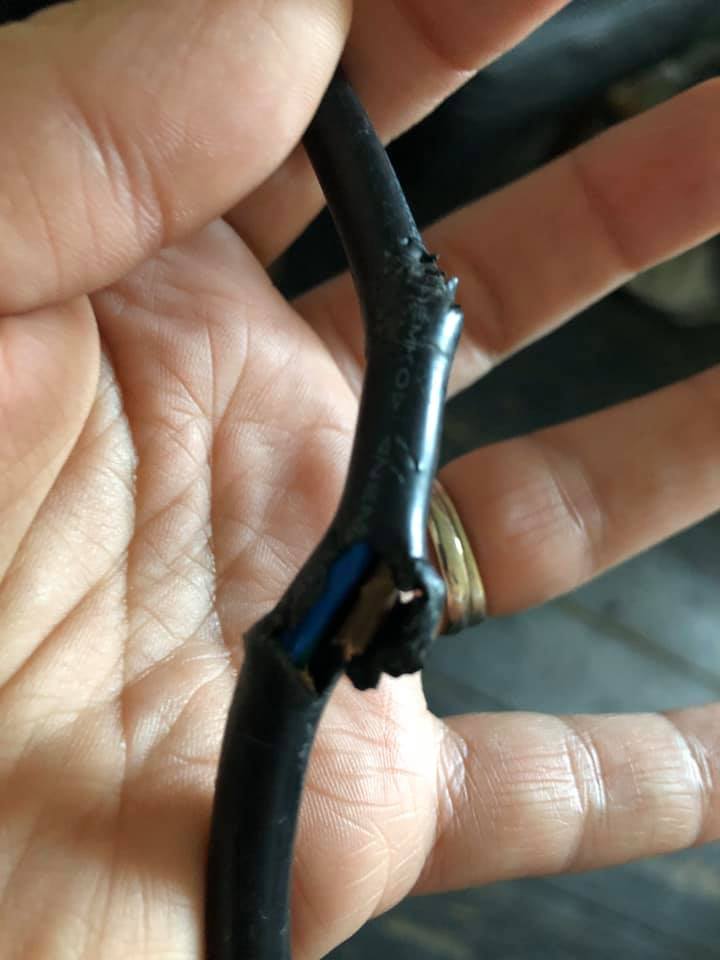
The puppy is sly and we quickly had to amend the schedule to make it very clear who had responsibility for her (green paw symbol). Otherwise, she had started to chew wires, eat poop (a habit we had been reducing) and generally cause mayhem. We also limited phone time (I mentioned this in the last blog post). Sofa: I’m still sleeping on it. Turns out that helps for social distancing, too.
12 week isolation period

My wife got The Letter. Long and short of it is that she is under house arrest for 12 weeks from the date of the letter: March 27th. She cannot separate herself from the rest of the family because of the size and configuration of the house, so we are now shielding her by also going into isolation.

Day 1 of this realisation really punched a hole in our holiday-spirit approach to Coronavirus.

Suddenly, group dog walks are a no. Going to the paddocks is a no, to remove all risk of contamination. Quick dashes to the local shop, adhering to social distancing rules, are a no. The man-child and I can walk the dogs from our front door once a day and that’s it. For 12 weeks. Or 3 months. Or 84 days. We each have a preference for which sounds better.

Our last action was to fetch a click and collect order from Tesco, which we essentially did in a hazmat suit and with a litre of disinfectant. Sleeping on the sofa is now mandated by the Government so that my wife and I can maintain appropriate distance (plus my back still isn’t right). And now we stay in until June 27th. That is, of course, if Coronavirus got the memo and sticks to the script. In reality, this could be much, much longer. (EDIT: flipping doodah, Jo… you got this very wrong! It’s February 2021 and you’re still shielding!).
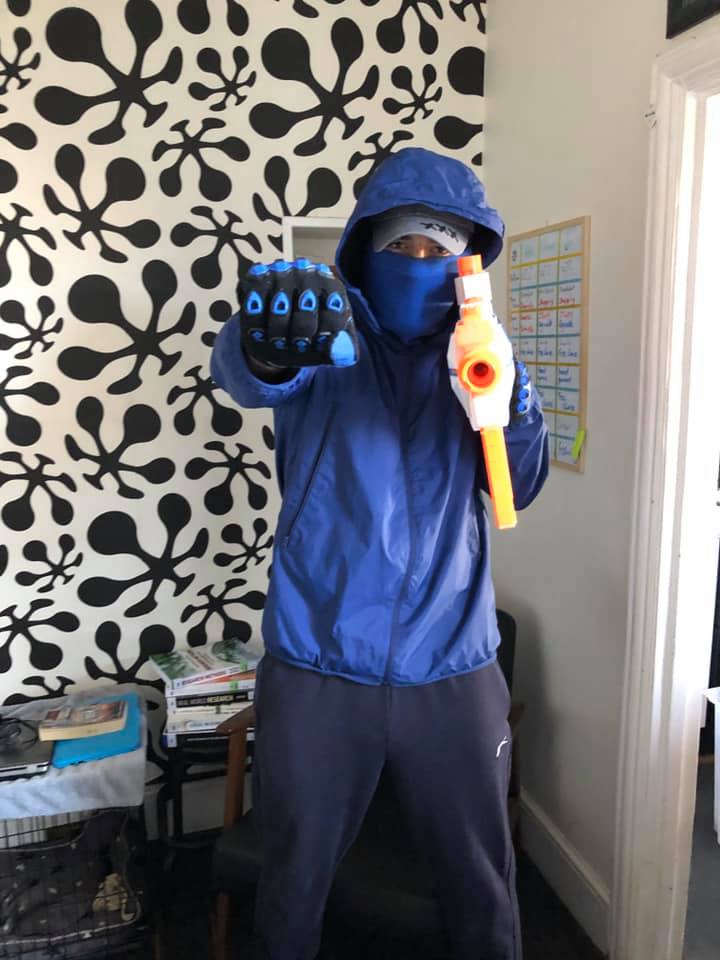
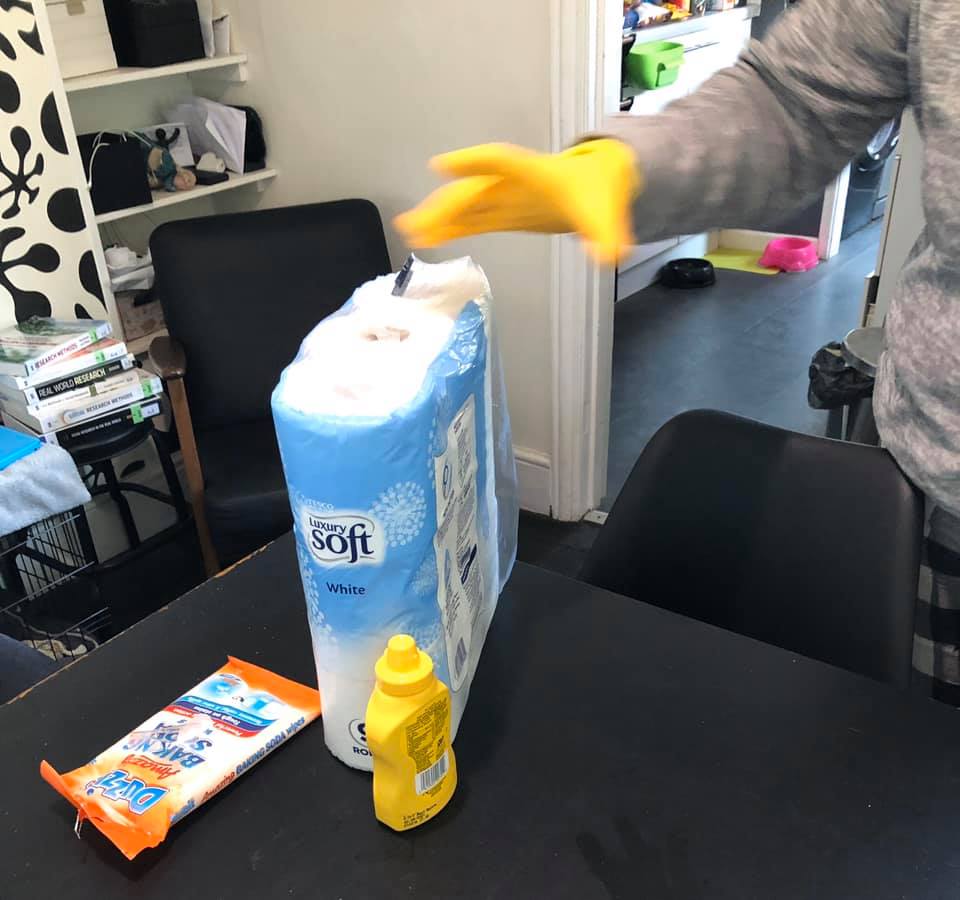
It will certainly take us up to my end of year period, when I should be submitting materials, undertaking a presentation and then completing my confirmation review. My new reality is that all of my research has to be undertaken in this tiny house, in the presence of two other large personalities.

All of which is to say that we spent this Sunday finding a solution. It was better than having another meltdown.
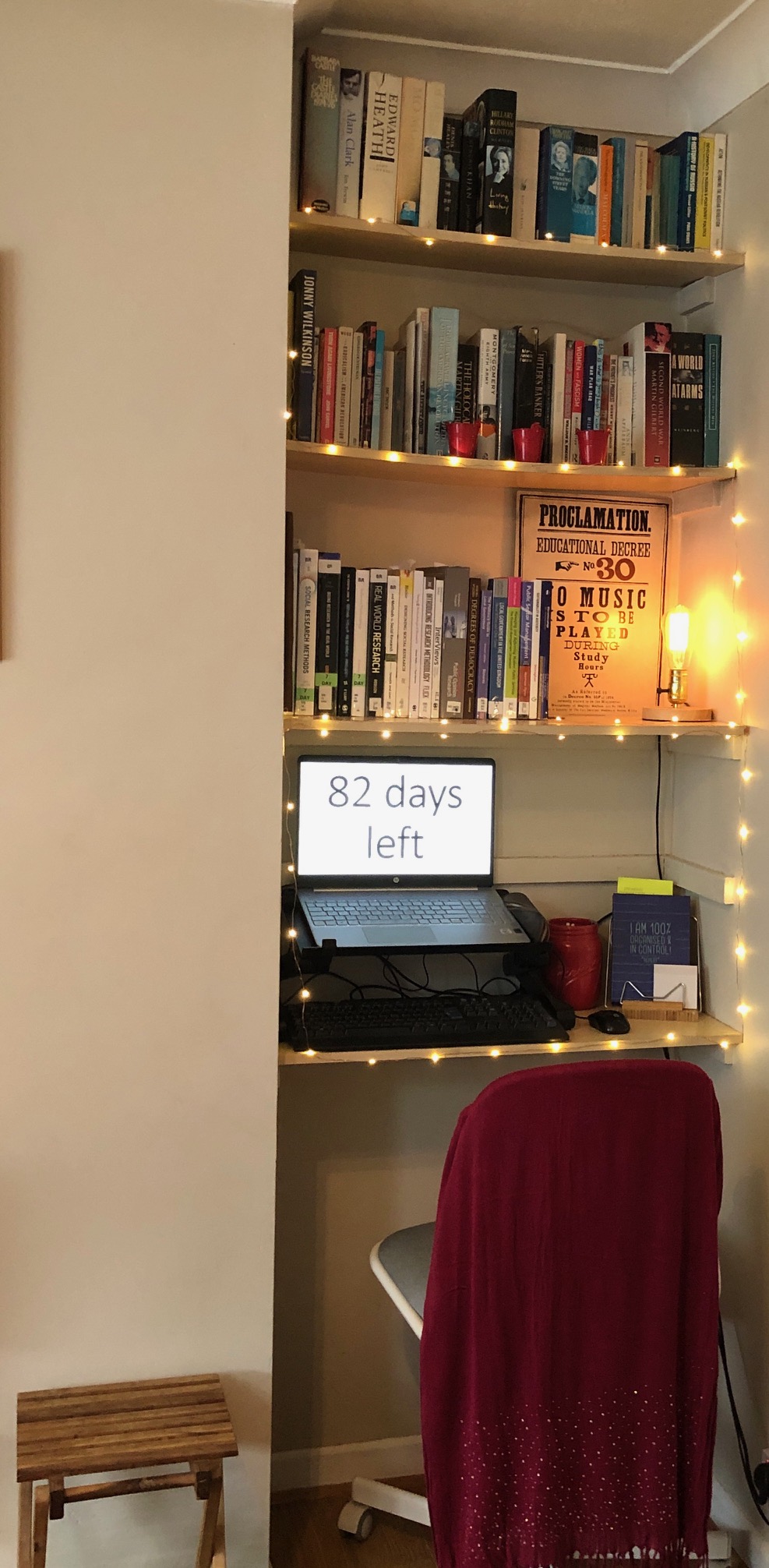
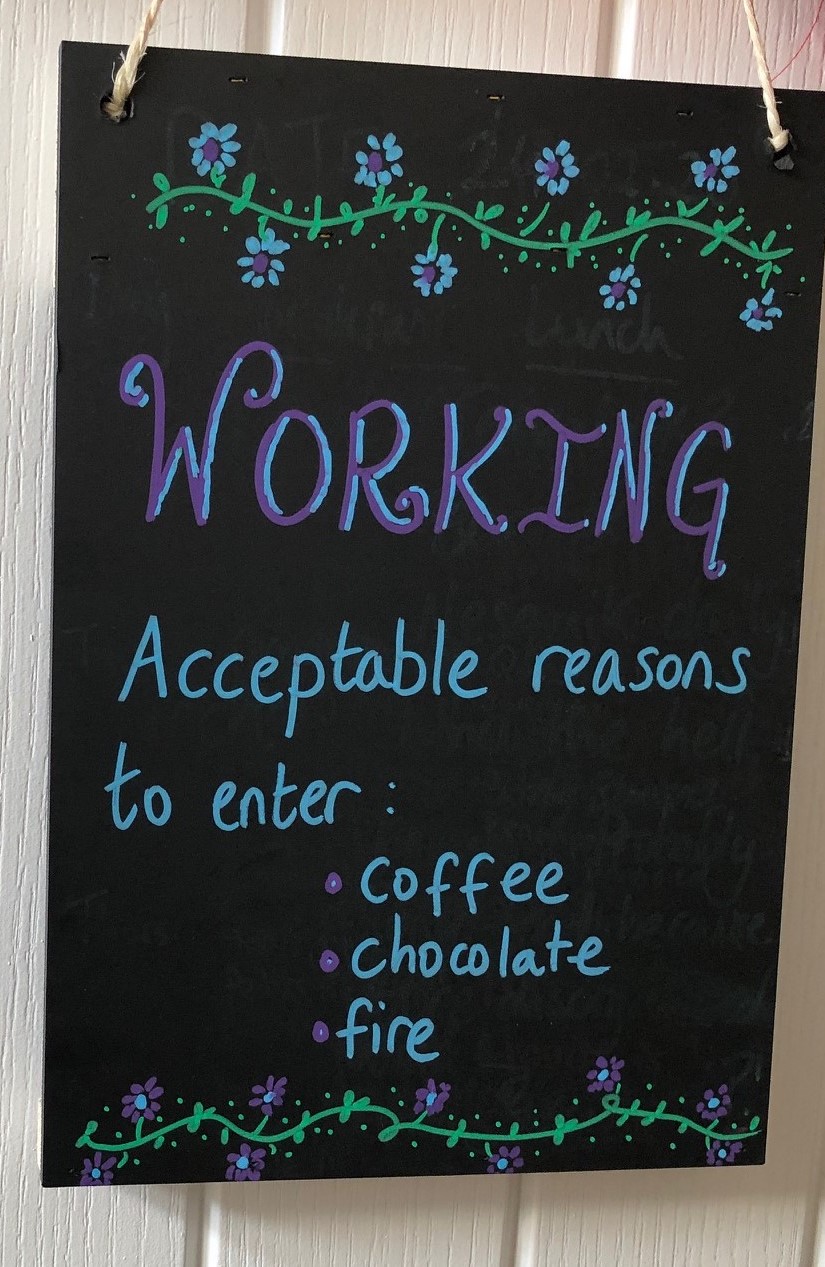
I have reconfigured a corner of our lounge. I now have a chair, foot rest, side table, desk, elevated laptop, book stand, lighting, Harry Potter themed items and my library books. Literally, my library books as I can’t return them to either library at the moment. I’ve tested it out today and it seems to be a productive and plausible space to work. I’m fortunate that my wife has offered to take the bulk of the puppy duties to enable me to catch up. Also, as we now eat at 7 p.m. (ish) and do family things from 8 p.m., it means there’s a natural cut off for using the space.

When I was asked to do a PhD, and warned coached about the trials and troubles of doing a doctorate, I can honestly say that over half the items on this list were never mentioned. Moreover, I am fully aware that if I had not left my job in February, I’d still be at home now and able to work uninterrupted on my PhD. On either full pay or 80% pay. Yeah, thanks again, Universe.
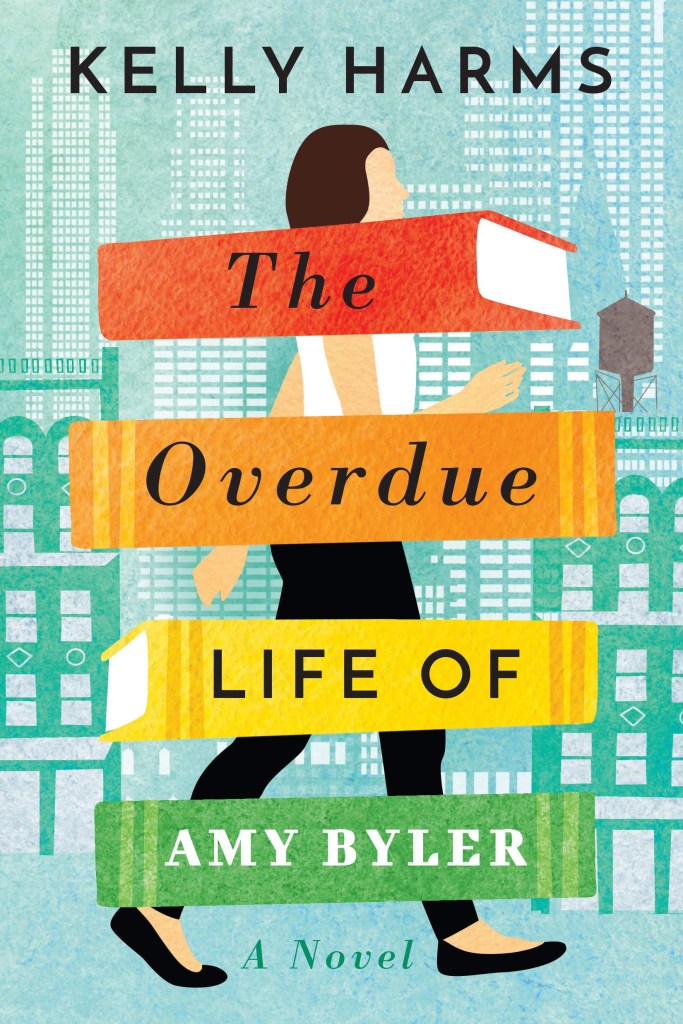
Even more books, glorious books (might as well make the most of the lockdown)…

Book: “The overdue life of Amy Byler”
Author: Kelly Harms
Source: Amazon Kindle and Audible
Rating: 💖💖💖🖤🖤
Plot: Byler is readjusting her life following a cheating husband, her return to the workforce and an overdue existential crisis.
Positives: it’s charming. There’s enough in it that I can empathise with and the characters are not flat. An easy read.
Negatives: chick-lit just isn’t my genre. Some of it is a little trite, predictable and saccharine.

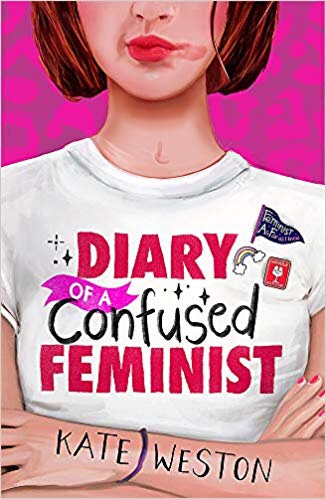
Book: “Diary of a confused feminist”
Author: Kate Weston
Source: Netgalley ARC (advance review copy)
Rating: 💖💖💖💖🖤
Plot: Kat is writing a diary to help her to do “good feminism.” It’s a cathartic coming of age story.
Positives: honest insight into the lives of young women. It’s effortlessly inclusive, which is refreshing. It raises some big issues but handles them well to avoid lecturing the reader.
Negatives: it’s slow to start and it took me a while to like Kat (Weston might have done this on purpose). Some of the humour was a miss for me but I’m unlikely to be its target audience.

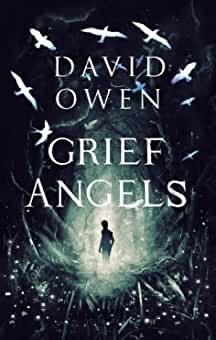
Book: “Grief angels”
Author: David Owen
Source: Netgalley ARC (advance review copy)
Rating: 💖💖💖💖💖
Plot: Owen has recently lost his father, Duncan has diagnosed depression, Lorenzo, Matt and Saeed are also dealing with issues, including relationships, confidence, grief, exams and body image. The book explores a group of boys as they navigate the route from adolescence to adulthood.
Positives: the fable-like narrative structure is clever, whipping the protagonist from this reality into a fantastical realm that evokes images of Greek mythology. It’s thoughtful and unyieldingly honest about grief; moreover, the characters are complex and realistic. Whilst there is growth and development, there’s none of that Hollywood-happy-ending that can damage authenticity.
Negatives: not everyone will get along with the to-and-fro of the narrative.

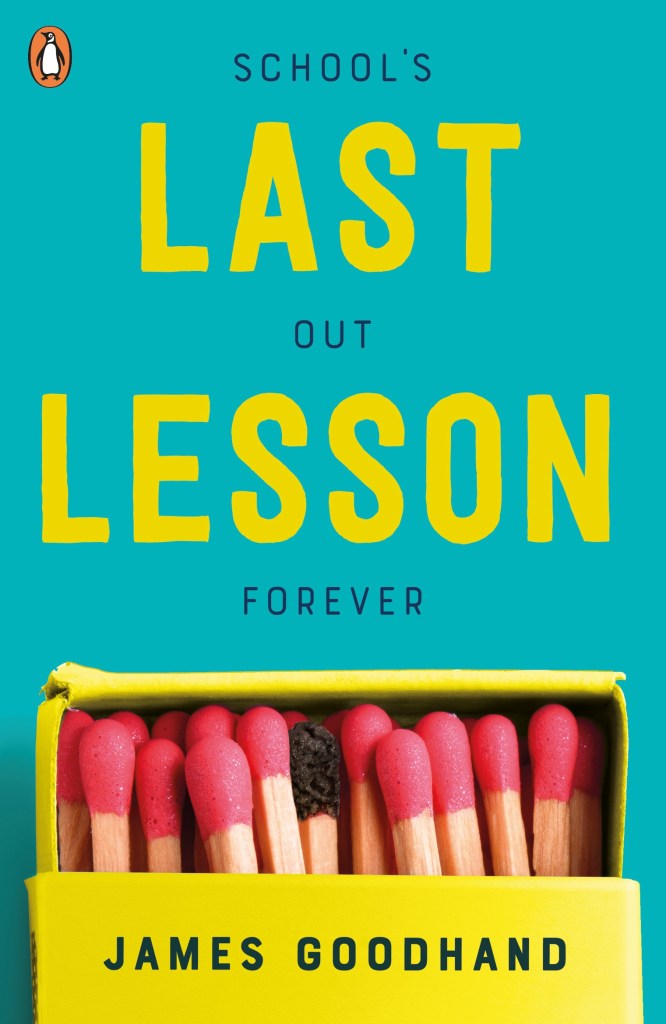
Book: “Last lesson”
Author: James Goodhand
Source: Netgalley ARC (advance review copy)
Rating: 💖💖💖💖💖
Plot: I can’t really tell you without ruining it!
Positives: the writer is a genius. This book joins the ranks of “The Handmaid’s Tale” (Atwood), “The Power” (Alderman) and “The Lord of the Flies” (Goldman) because they are all stories which echo and itch – refusing to leave my skull.
Negatives: …

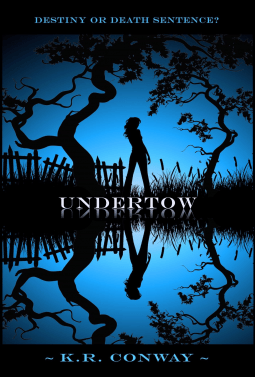
Book: “Undertow”
Author: K.R. Conway
Source: Netgalley ARC (advance review copy)
Rating: 💖🖤🖤🖤🖤
Plot: Eila Walker inherits a mansion with a dark past around the same time that she finds out her own history and genetic makeup is unusual. Essentially, she is Lunaterra who don’t get along with Mortis and she’s discovered she’s in the middle of a centuries-old feud.
Positives: until the scene described below, I did like the protagonist and how she viewed and described the world around her. Whilst it was a plot-device, I did also like seeing an alternative family set-up (Eila lives with her mother’s best friend following the deaths of her parents).
Negatives: it’s pretty predictable for this genre. Likeable protagonist ✔ Range of sidekicks ✔ Forbidden love story ✔ Drip-drip-drip reveal of details ✔ Lots of money ✔ Parents / guardians conveniently out of the picture ✔ But it’s not the predictability that got my goat. I more annoyed about the handling of important real-life issues. For instance, “spazzed” is not an acceptable verb choice for how Eila’s heart reacts to her love interest and nor should I have to go into details about why. Moreover, when Eila is sexually assaulted, everyone (including Eila) brushes it under the carpet and blames the alcohol the young man consumed. Er, what?! “He has a low tolerance for beer” (so do I but I haven’t assaulted anyone whilst drunk); “he tripped and fell on me, and then got other ideas” (ideas that show he’s a sexual predator); “he’s not that type of guy” (he’s groping Eila without consent so he is that type of guy); and, from Eila, “I knew he was drunk and hopefully wouldn’t act like such a moron when he was sober, but the alcohol was clouding any decent judgement he had.” This last one is particularly grim. Eila’s character admits that she doesn’t know Teddy at all so how would she suppose that the alcohol was steering his behaviour? And I doubt, whilst fighting him off, mid-attack, that she would really concern herself with how he might behave when sober. The whole passage was irrelevant in terms of moving the plot on or developing characters so it seemed to only serve the purpose of justifying drunk jock behaviour, minimising the experience of victims of sexual assault. Not good in a YA book. After this passage, the whole novel was soured for me and I had no affinity with the author.

Book: “A court of thorns and roses” (Book 1)
Author: Sarah J. Maas
Source: Audible
Rating: 💖💖💖💖🖤
Plot: Feyre (pronounced Fey-ruh – cheers, Audible!) is a human who lives very near the boundary between the human and fae worlds. She is the sole provider for her starving family and when she shoots a wolf-that’s-not-a-wolf so that she can claim the rare doe they are both hunting, everything in her world unravels. She ends up in the fae world, prisoner in the Spring Court. Blah blah blah romance… blah blah blah mythical history… blah blah blah heroes and villains. Etc.!
Positives: Maas is able to create whole, intricate worlds – like Trudi Canavan and George R Martin – allowing me to get lost in them and slightly peeved when I have to leave them behind. I can predict small plot developments and twists but, on the whole, she’s adept at surprising me and imagining ideas beyond my scope. I am looking forward to reading more of the series and finding out more about the world beyond the wall.
Negatives: in a few ways, it’s quite similar to her other series, Throne of Glass. I suppose that’s not really a negative as one of those similarities is headstrong, independent, female protagonist. The problem with first-person narrative is that I can’t ever escape the romance. It would be nice to read a book where that isn’t a main thread or integral part of the plot.

I’m not enjoying being a character in a dystopian YA novel*

My wife has asthma. It’s severe. We’re used to managing it; she has an excellent asthma plan and supportive health care professionals. She spends a great deal of the year on various combinations of drugs, including steroids. These have messed up her skin and made her hands so puffy that she can no longer wear her wedding band and engagement ring. It’s a very good job she’s always oblivious to other women trying to flirt with her!

All this is to say that, as a household, we are now on lockdown as the UK tries to flatten the Covid-19 curve. Today is Day 2. I already have 72 new grey hairs.

My actual hair…

I’m not entirely convinced that my wife or the man-child we care for (19) really understand what it is I do. They can’t picture what the week looks like for someone doing a PhD, predominantly remotely. Oh, whilst juggling tutoring work, two elderly cats, an old dog, a puppy and the running of the household. Well, they’re going to enjoy a steep learning curve. It’s not all coffees, Nana naps and daytime TV.

Our house is tiny. It’s a two-up-two-down Victorian terrace. We have a downstairs bathroom at the end of the kitchen (both are extensions), a postage stamp garden and a 1.5 sized garage. We don’t really have any room to escape from one another. In a normal week, the man-child has college, work and a social life (all three are now cancelled); my wife works 18 miles away in a seaside city; and I study at home or at the local university, by using some excellent doggy daycare facilities nearby. Now, we’re all trying to maintain normalcy as we bump up against one another all day. Every day. For an indeterminate length of time.

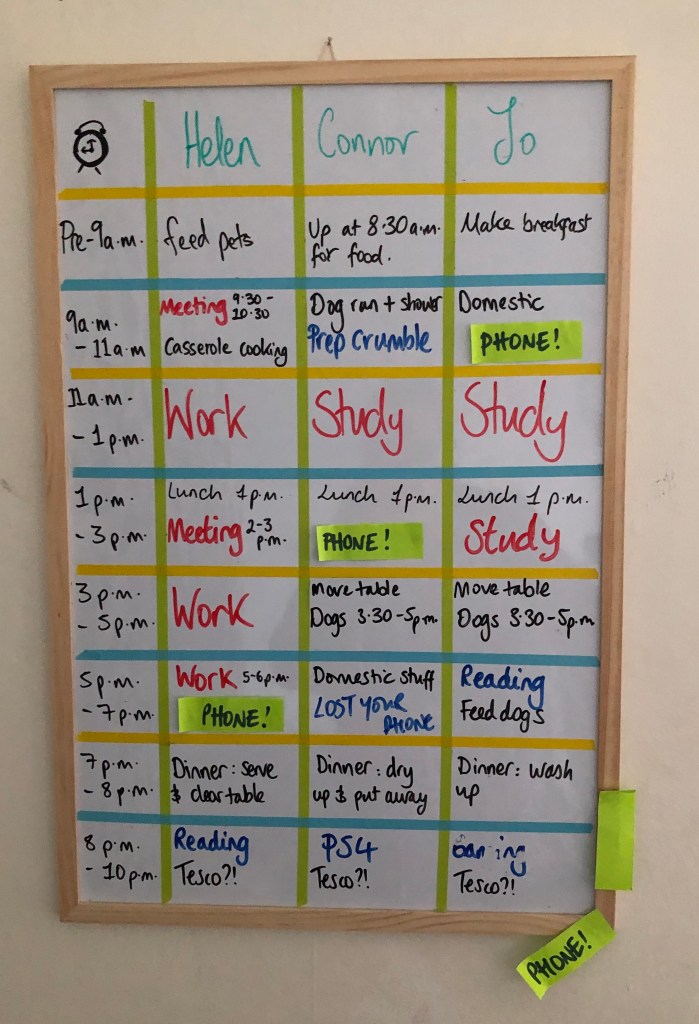
With that in mind, we’ve developed a schedule. The man-child wants fun things to do, my wife and I want to be able to maintain our workloads, the pets need entertainment and I am adamant that we are not all just going to be glued to our screens 24/7. In fact, I’ve found that my wife becomes a poor communicator and lethargic if she spends too much time scrolling through Twitter and the news, the man-child actually becomes unbearable moody and verbally aggressive (not his normal traits) and I recognise that I become unmotivated to do anything else. The result of our combination of needs is a daily schedule.
We all contribute ideas but I write the up because the other two have the handwriting of inebriated toddlers.
The man-child gets two slots a day to phone splurge and my wife and I are trying to stick to one in the working week. As you can see, we haven’t even made it to midday on the first day of the schedule and the man-child has lost his second phone slot. Rather than keep the puppy with him in the garage as he stretched post-run (as requested), he let her free roam the garden so he could try to stealthily use his phone (not so stealthy when he was literally standing at the window). If you know our puppy, you’ll remember she likes to eat poop. Gross. So she naturally dropped one and ate the whole thing without him realising (we know this as it’s in her beard; her breath/burps stink of poop; and there is no poop to be found in the garden). Sigh.

I am perfect in every way but one: poop muncher

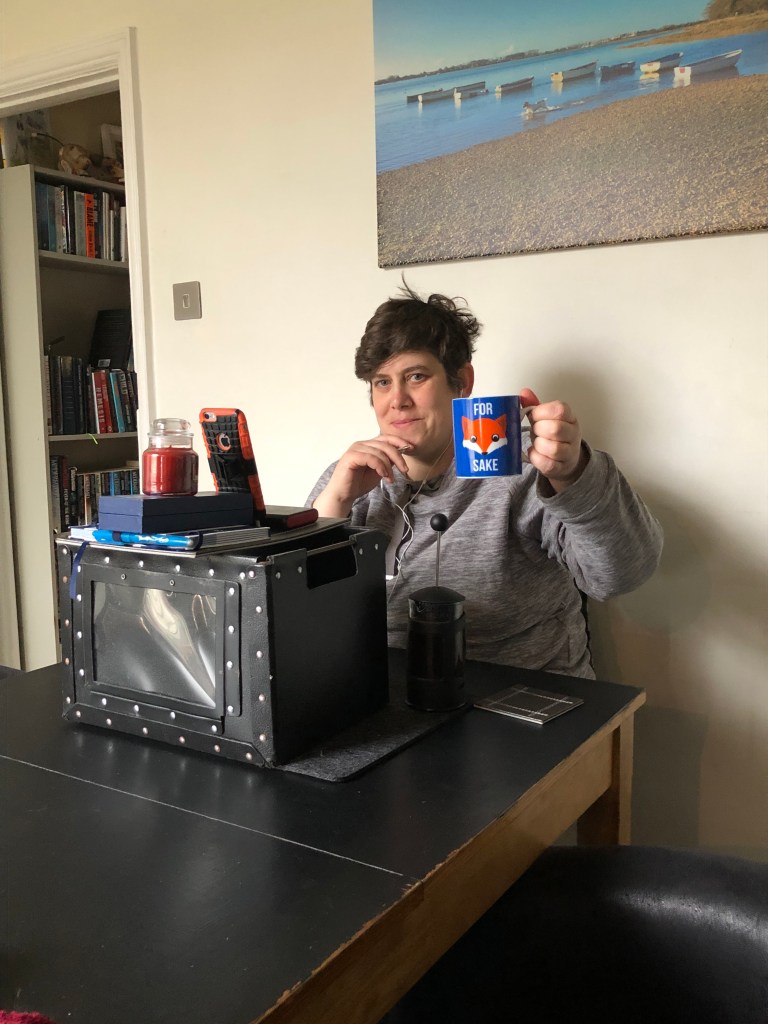
I know it looks like I’m only working two hours a day but that’s just for today. It’s in recognition of the fact I have to project manage the man-child to help him transition into a lockdown situation and, it transpires, become IT support for my wife. She hasn’t had to work from home like this before. Ordinarily, if she’s working from home, it’s so she has the peace and quiet required to write a paper, presentation or policy. Also, she usually has the house to herself. For the first time, she’s surrounded by other two and four-legged creatures and she’s experiencing meetings online with multiple stakeholders. She has a new found respect for making sure the background is appropriate, ensuring the cats aren’t waving their winky-arses at the others in the conference call and getting your own screen to just the right angle so your double chin isn’t suddenly a quadruple chin.

This meeting was brought to you by box, Yankee candle, Waterman fountain pen, notebook and placemat. What a sturdy support team.
Let me help you with that…

Then there’s WiFi speed, sound (she wears a hearing aid) and choosing an appropriate mug. We have lots of mugs and none of them match; each one comes with a story or was a gift.

Spot the inappropriate mugs.

We decided a daily schedule offers more spontaneity. The night before, we can decide what we want to do and eat. Some things are immovable (like feeding animals or attending pandemic crisis meetings) but others can be flexible.

Alongside this, we’re planning food so we eat our perishables first and take turns cooking.

We had frozen pineapple and dried mango – we haven’t been wasting money on middle class fruit!

Financially, this is super important. The man-child used to be fed at work for 6 dinners / lunches out of 14 and, as a vulnerable adult, the college helped fund his lunches. Also, I stopped work in February to focus on my PhD without realising that Covid-19 was going to put us all under house arrest. I’m a very poor, full-time student; any money I make from tutoring is immediately spent on doggy daycare so that I can study in peace. All of which is to say that my wife’s income is now fully supporting two other adults and four pets. And the man-child loves eating. Like other families, we are worried about money. There are no savings anymore because we used them to support the man-child’s family for years and then the man-child himself when we took responsibility for him 3 years ago. The universe played a cruel trick with that timing… I had chosen to start a Master’s degree and step away from a very well paid job. Then, boom. Just as we became a one income household, we had another human to care for.

We work month-by-mouth. We’ve cancelled any direct debits for things we no longer deem necessary (now I’m fielding phone calls all day from sales people asking if I’m sure I don’t want blah-blah-blah product support) and undertaken a full stock check of our food cupboards. My wife is naturally very worried as she is currently in her probation year for a new job: it’s a job that relies on her ability to fundraise £10m in 2020. Global pandemic: not the best context for fundraising.

For now, I’ve hidden all the Nerf guns and ammunition. Just in case.

* I recognise there are people in far worse situations than us. My anxiety is sky-high when I think about them, particularly as I don’t know how to help. These are just my ramblings about our specific situation and how we’re coping.

The real Brexit…

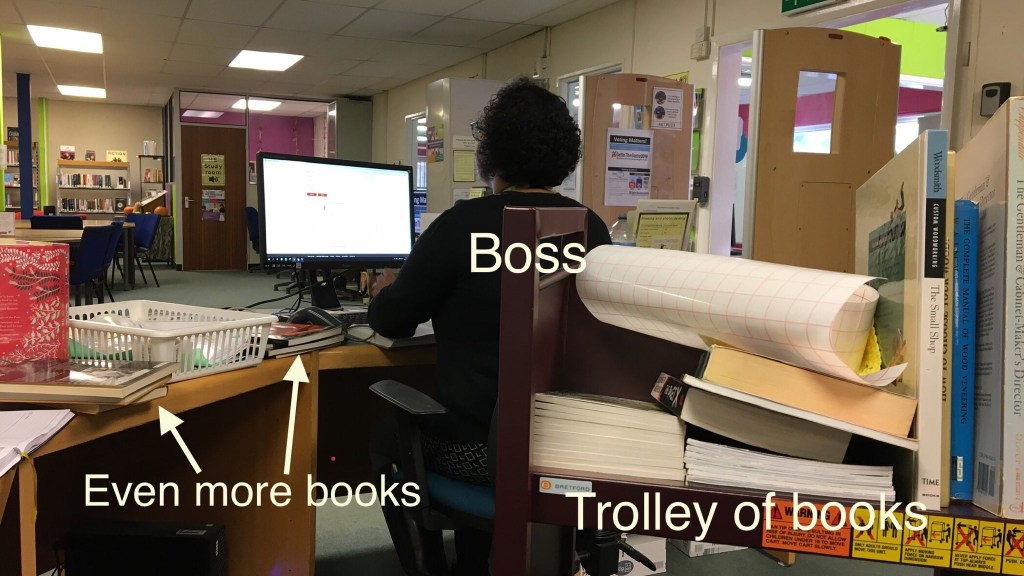
My lovely boss asked me some Brexit questions: Brinsbury exit…

What’s your first memory of Brinsbury?

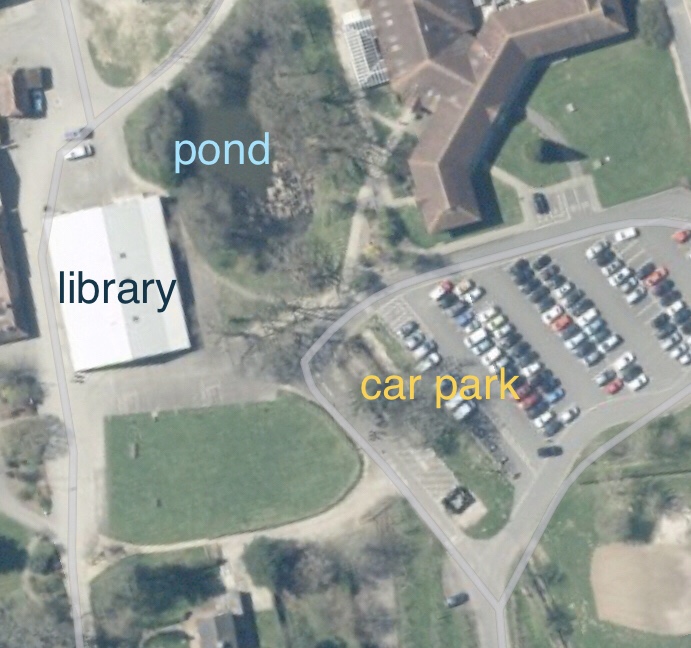
Trying to find the library. A member of the Chichester team had drawn me a map of how to get from the car park to the library doors. I spent a few minutes circling the pond, looking confused.

I could get lost in a paper bag.

What’s your funniest memory?

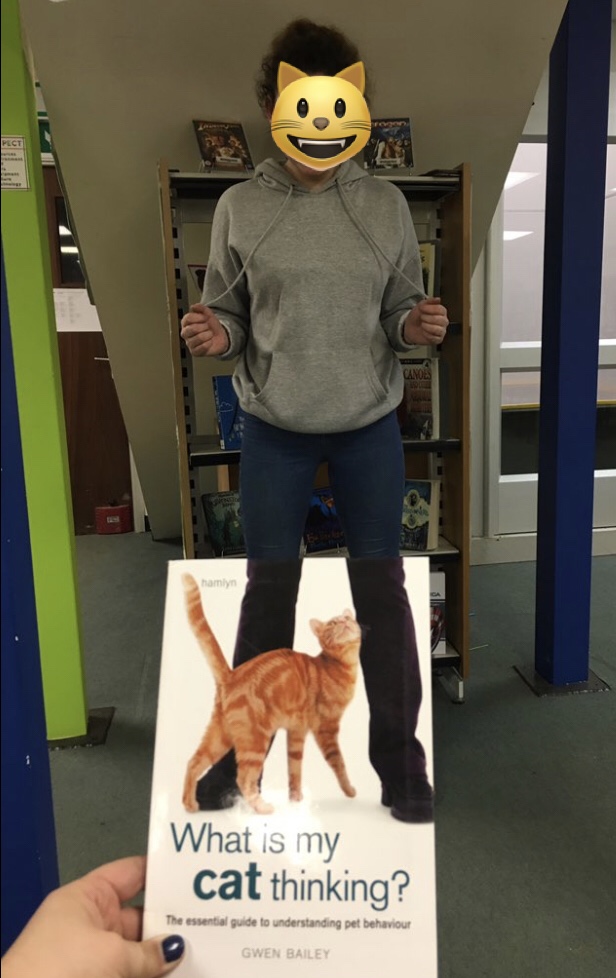
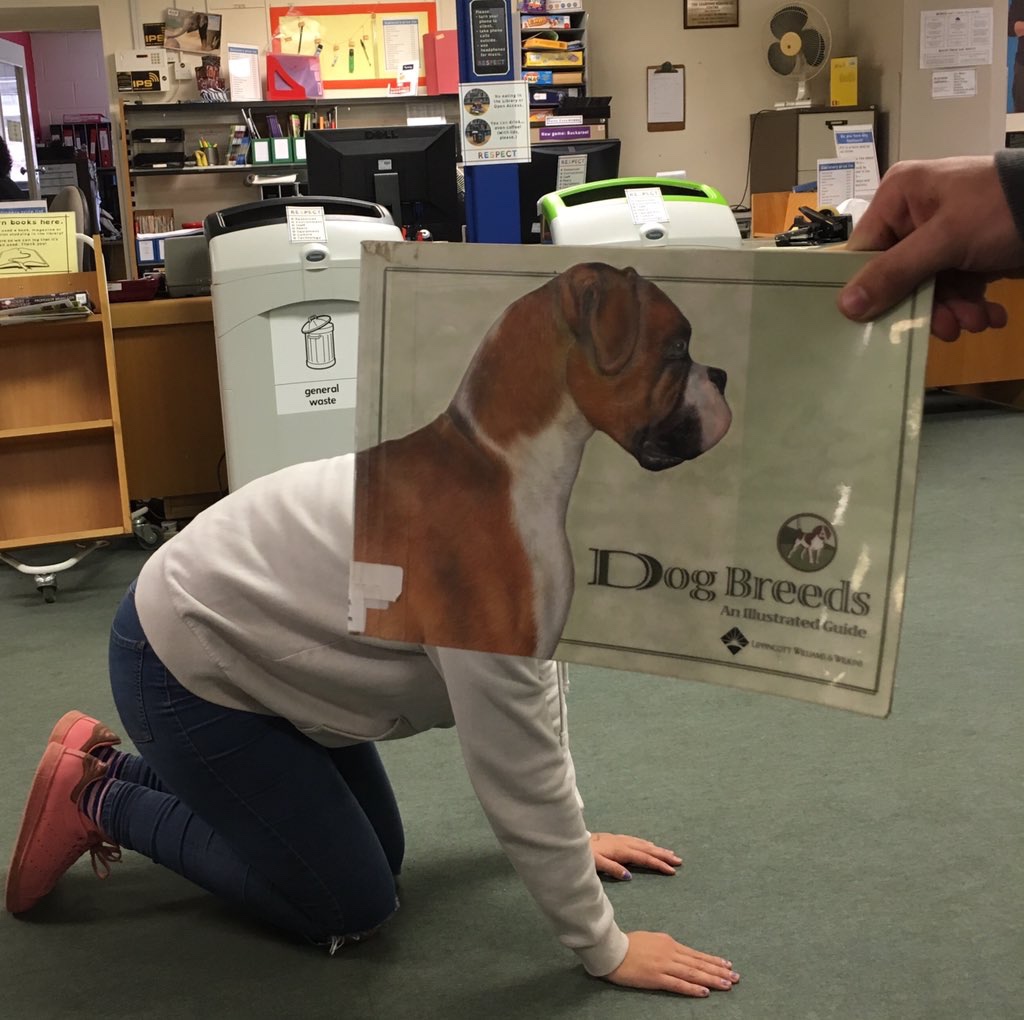
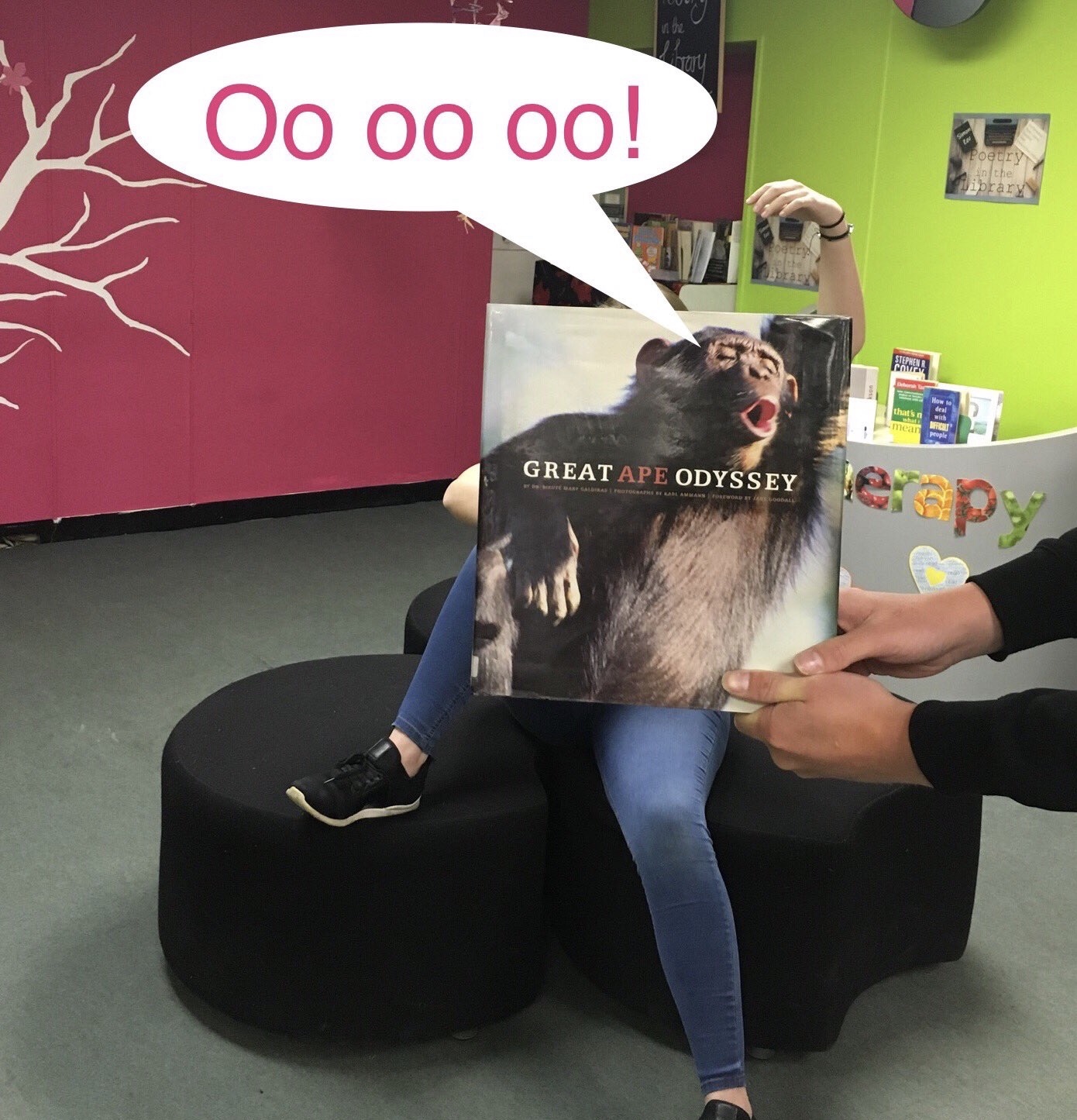
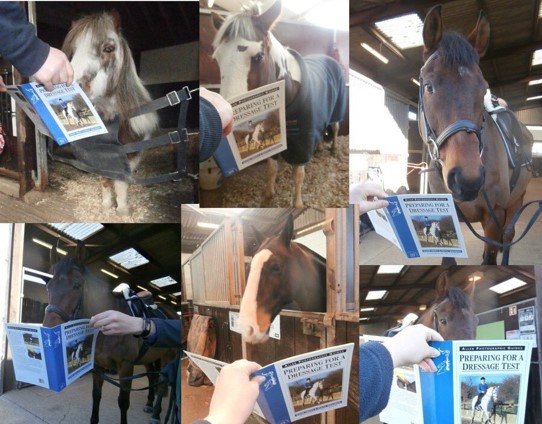
Ooo. This is tricky. I’ve really enjoyed involving the students and staff in #BookFaceFriday as we’ve had some hilarious outcomes (see evidence).

But the funniest moment has to be when one of our regular students realised how a library works…

Me: Shall I put these on your account to take home? Will you need a bag?

Student: (A few seconds silence). You mean I can take the books home?

Me: Yes.

Student: To my house?

Me: Errr. Yeah…

Student: (Huge gasp).

Me: (Baffled). Are you okay?

Student: (Shouting and running around the library, and the adjoining computer room, addressing everyone in her lesson. Actually, even people who were not in her group). Oh my God, guys. Guys! Guys! Did you know we can TAKE THE BOOKS HOME?! This is the BEST THING EVER.

Sum up Brinsbury in a sentence and a single word.

Sentence: Brinsbury is a melting pot of people, ideas and aspirations.

Word: family.

What will you miss about Brinsbury?

The three Ss… Stella (my boss), students and staff. But I’ll also miss the job because it’s varied, unpredictable and rewarding.

What are you looking forward to leaving behind?

Bloody dust jackets: those covers we have to put on hardback books which have a sleeve. They are so hard to do and I always seem to have an audience when I’m doing it. Also, Bert. He’s the spider who lives on one of the CCTV cameras. He walks across it most mornings, looking like a giant character from Dr Who. He gives me palpitations and makes my Apple Watch buzz: Well done! You have exercised and raised your heart rate.

How would you describe working at Brinsbury to someone who doesn’t know it?

This is tricky. Horses and ferrets and chainsaws and trees and forges and strawberries and cooking and squirrels and mud and boots and laughter.

The library is the kind of place where the same day will include: teaching a student how to save and print a Word document; coaching a student on how to improve a CV and apply for a job; helping choose a fiction book for a student’s son; teaching study skills to a class so they can research – beyond Google – for a forthcoming assignment; making a pot of coffee for a lecturer who hasn’t stopped all day and who needs a caffeine injection; showing a student how to apply for a university place; reading a book to a delightful group of 4 year olds who’ve popped in from First Steps Nursery; taking photos of plants and pets reading in various poses; teaching a Higher Access student how best to use an academic, peer-reviewed article for an assignment on conservation issues; unjamming the photocopier a few times; unjamming the photocopier a few more times; signing up students and staff for a reading challenge; setting up a microphone for a poetry event; working alongside a student volunteer; issuing headphones, books, laptops, phone chargers; visiting a GCSE English class to offer support in the build up to exams; covering the 52 books Stella has suddenly ordered; creating content for our social media platforms.

3 top tips for your replacement.

1. Get to know the students. They are great and the more you know about them, the more you’ll understand them and the more you can help them.

2. Get to know the campus. Don’t just hide away in the library. It’s true that people will come to you (the library is the heart of the college) but you’ll be missing out if you don’t go and visit the teams all across Brinsbury.

3. Wear comfy shoes/boots. Some days, I’ve walked 4 miles without leaving the tiny building.

Advice to Stella…

No advice needed. Keep doing what you’re doing because you’ve reinvented the library service and it’s dazzling. Oh, but keep the coffee jar topped up.

Advice to students…

Stop putting things off. Get that assignment done. Start that homework. Book your driving lessons or test. Organise WEX. Apply for the part time job. Do it all now so you can manage your time and responsibilities, instead of panicking when all the deadlines come at once.

What will do on your first day off (WHEN YOU SHOULD BE AT BRINSBURY?!)

Drawing up an action plan for how I’ll get enough research done by July 2020 to pass my PhD Year 1 confirmation review. Let’s not talk about that as it’s making me nervous!

Turns out the best laid plans and all that jazz… I didn’t even make it to the end of half term before I injured myself. Three intercostal tears and a 3-6 week recovery time. So, I’ve spent the first “day off” stuck in a reclining chair, taking medication and alternating between a hot water bottle and an ice pack. Joy.

More books, glorious books…

I’ve been reading when I should be studying. In my defence, norovirus + a cold + a series of migraines + a chesty cough have combined to kick my ass this last month. Reading is medicine.

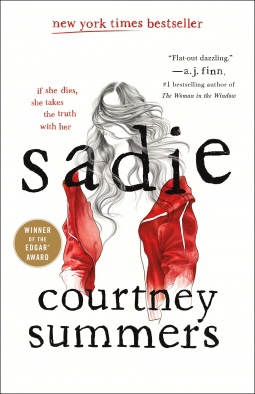
Book: “Sadie”
Author: Courtney Summers
Source: Netgalley ARC (advance review copy)
Rating: 💖💖💖💖💖
Plot: the story of a missing girl pieces together through an epistolary style narrative
Positives: characterisation, structure, genuine twists, the ending. It’s gut wrenching
Negatives: …

Book: “Gold the moon eater”
Author: I.M. Bones
Source: Netgalley ARC
Rating: 💖💖💖🖤🖤
Plot: a magic wielding demon is an assassin for the family business
Positives: Gold/Silas, the murderer, is a pretty good narrator in a twisted Dexter kind of fashion
Negatives: I didn’t really care about the other characters and the breaking of the 4th wall was predominantly clumsy and patronising

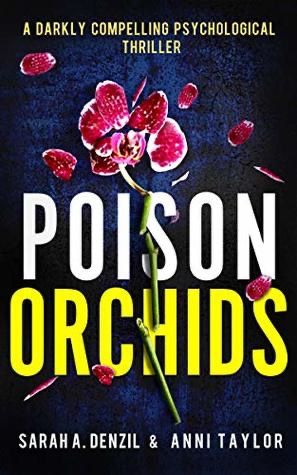
Book: “Poison orchids”
Author: Sarah A Denzil & Anni Taylor
Source: Audible
Rating: 💖💖💖💖🖤
Plot: two backpackers are rescued from something that’s left them bloodied and traumatised… but their stories don’t match
Positives: twisty and unpredictable with some brilliantly written characters
Negatives: occasionally too far fetched, hence the 4/5

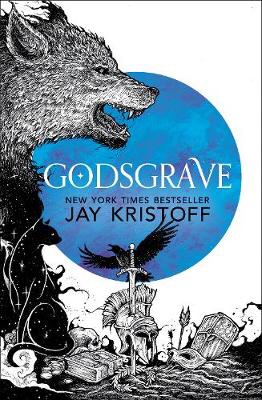
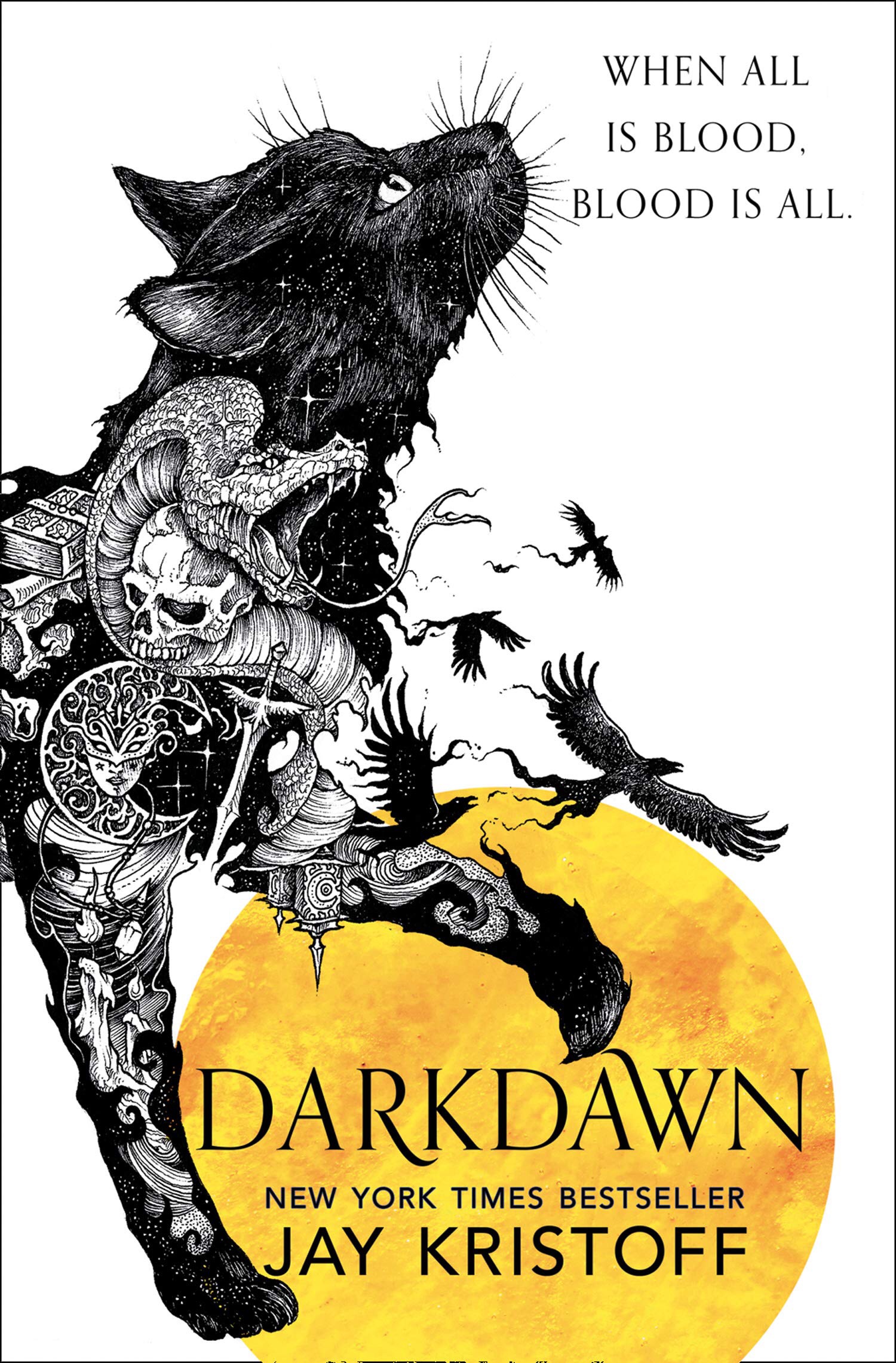
Book: “Godsgrave” and “Darkdawn” (books 2 and 3 of the “Nevernight” Chronicles
Author: Jay Kristoff
Source: Audible
Rating: 💖💖💖💖💖
Plot: tricky without giving anything away. Mia continues her journey to avenge her family and discovers more about herself along the way
Positives: blood, gore, sex, passion, magic, death, creatures, sarcasm, poison, sword play, swearing
Negatives: the fact it’s all over and I’m going to have to find something to cure the book hangover

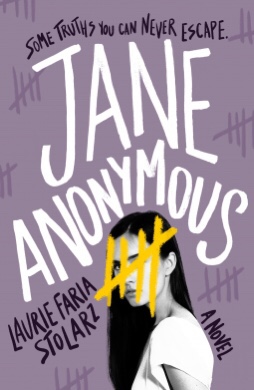
Book: “Jane Anonymous”
Author: Laurie Faria Stolarz
Source: Netgalley ARC
Rating: 💖💖💖💖💖
Plot: a young woman, Jane, is kidnapped and held by a manipulative, game playing captor. When she escapes, she doesn’t truly escape
Positives: brilliant character study, exploring the impact of trauma. It took a long time to disentangle myself from the story
Negatives: some of the plot twists weren’t all that twisty but I think that was deliberate, anyway, so the reader is ahead of Jane

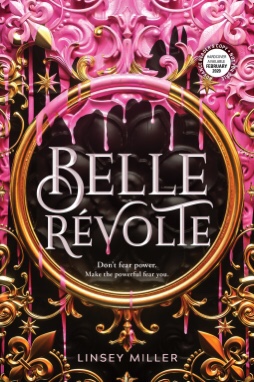
Book: “Belle Révolte”
Author: Linsey Miller
Source: Netgalley ARC
Rating: 💖💖🖤🖤🖤
Plot: set in a classist, misogynistic world with magic, two young women switch places to access education and end up embroiled in war
Positives: in many ways, it was a new, unique depiction of magic and Miller definitely paints the settings effectively
Negatives: really shallow character development so, despite flipflopping the narrative between the women, they felt and sounded like the same person. The plot was pretty flat until well over half way through. Overall, I’m grumpy because I loved the author’s last book (“Mask of Shadows”)

Big decisions

Where to start?

First of all, I’ve decided to put my hat in the ring and have a go at winning some funding for the PhD. I’ve spent quite some time on the phone to SFE (they’re really nice to you once you’re a postgraduate borrower of money, it transpires) who assure me that this is all above board and won’t leave me out of pocket if I win the funds. Yes, I’ll not receive any more student loan payments but, no, I won’t suddenly have to stump up thousands to pay them back instantaneously. This is a moot point anyway as the funding is damn hard to get – they even call it an “open competition,” which sounds a little Hunger-Games-esque to me. First to the cornucopia gets the funding?! The White Rose College of Arts and Humanities is a federation of the Universities of Sheffield, York and Leeds; the funding is open to PhD students in multiple schools / faculties across all three and only 40 people are awarded the funding. My guess is that the majority of it will go to 2020 first year students, not those of us who are beginning our second year, because it’s a good marketing tool.

In the first instance, I’ve had to apply to the Information School to get their go ahead to then apply to WRoCaH. Yup, that’s its acronym and it’s pronounced rocker. Whilst I’m very unlikely to win the funds, it is good practice at writing bid-like things and explaining what it is I’m trying to achieve.

Second of all, it is time to euthanise my laptop. I’m hoping it isn’t self-aware enough to read that last sentence and that our Alexa device hasn’t given it a heads up. It is slow and clunky; it basically takes longer than me to warm up in the mornings. Once you have more than two tabs open on t’internet, it grinds to a halt. And multiple applications gives it a stroke. In my head, it’s a relatively new and powerful laptop but, in actual fact, I bought it in 2012. That’s probably geriatric in laptop terms, right? I have to turn my simple needs (fast, number pad for data entry, not too heavy) into technical specifications. And I don’t even know the difference between memory and storage. Plus I’m on a poor-student-budget. Nevertheless, I am committed to spending my loan (after fees) on this endeavour at the end of the month and to ensuring I don’t choose whimsically because I like the colour. I’ll keep this laptop because the man-child will need something for university and it will do until he saves for better.

How I am greeted most mornings…

Finally – and I guess I buried the lead – I’ve resigned from my job. Big, difficult, unwanted decision. It turns out that studying for a PhD full time – and remotely – isn’t conducive to holding down a job, even part time. I knew that the PhD would require self-motivation and discipline but I truly thought that I was enough of a workaholic that I could do it all. I can’t. It’s a very hard pill to swallow.

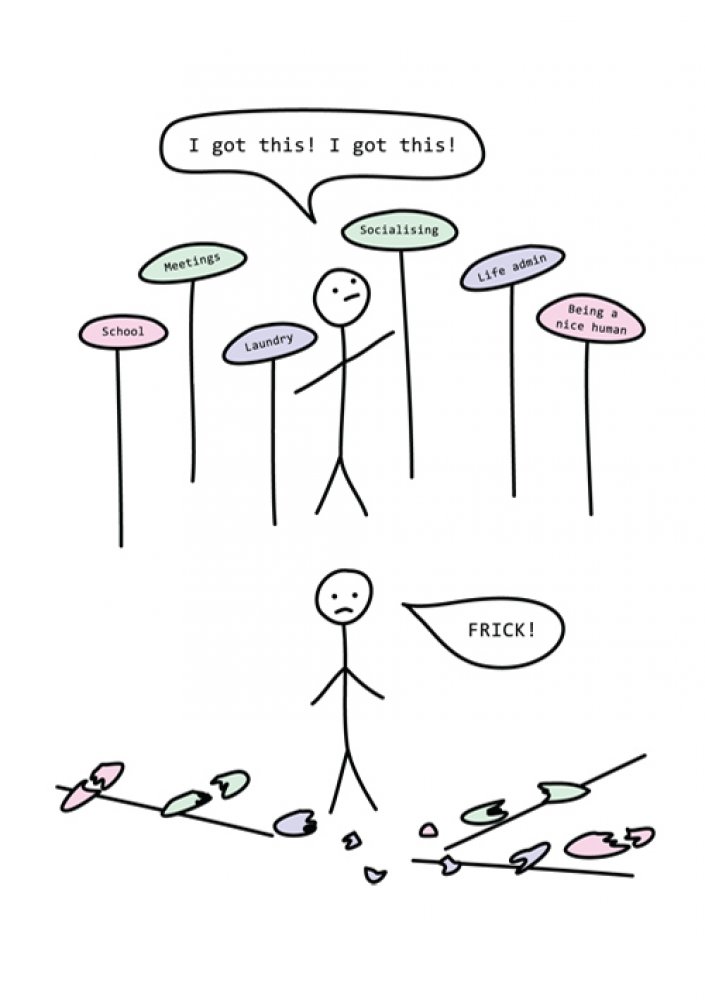
Currently, I am not in a productive routine and I’m jumping from deadline to deadline. Also, I need the flexibility to engage with the brilliant doctoral programme and academic development opportunities. Not only that, the man-child has hit the needs-me-but-doesn’t-want-me stage of his development (Nanny McPhee reference) and is taking up an inordinate proportion of my time… I won’t go into details because it wouldn’t be fair to share his life. I will say it’s exhausting and I also don’t want to unintentionally let him down because I am spinning too many casserole dishes (bigger and more awkward than plates). Essentially, life, wife, teenager and PhD are all plates that I cannot and would not drop, meaning I had to turn my attention to the work plate. One influential factor is financial stability: I am fortunate and grateful that my wonderful wife has landed an impressive new job and has offered to solely shoulder the burden of the household income.

Sketch by Hurrah For Gin…

I am gutted to be leaving my job for so many reasons. I have an excellent boss, who is a perfect mentor and coach for me: supportive and challenging in equal measures. Plus, she lets me flex my initiative. Any Sunday night blues are banished because working with her is a dream. The whole College Group was supportive of my MA, dissertation and research. The campus is so unique with cracking students and staff. It’s going to be a wrench to leave and I am not enjoying the countdown to the end of February.

The late and unstructured ramblings of an old(ish) library school student attending CILIP Conference 2019 in receipt of the PMLG bursary

I suppose I’ve used this subheadline as a warning of sorts…

When I sat down to write an article to sum up my experiences of CILIP’s 2019 conference, I thought I would tackle it traditionally and chronologically by taking the reader on a journey session by session. A logical and systematic approach.

Then I opened my conference notebook…

Wow. Conference-me was neither logical nor systematic. My notes are all over the place and reflect the fact that much of the conference content resonated with me on both a personal and professional level. I am a (shhh) year old PhD student who has left teaching and embarked on a second career in library and information services (LIS). So, if you fancy an emotional and slightly loquacious take on what it’s like to attend CILIP Conference as a first-time delegate and LIS newbie, read on. Equally, if that puts you off, I won’t be offended.

PhD and public library goodness

One of the main reasons I applied for the PMLG bursary was the focus of my PhD proposal. I’m continuing my studies at the University of Sheffield’s Information School, under the supervision of the inspirational Dr. Briony Birdi. At this early stage, I don’t want to give away too many details but the remit covers public libraries, perceptions and legislation.

There was a great deal of information and knowledge at conference that tugged on the thread I intend to pull with this research and which served as a reminder of all the good public libraries do for their communities.

Liz Jolly, Chief Librarian at the British Library, discussed the theme of librarianship and identity. Each delegate will have taken away different concepts from her address which looked back on her impressive career. I was interested in her take on what she considers the enduring values of the profession, influenced by the work of Michael Gorman1: stewardship, service, intellectual freedom, privacy, rationalism, equity of access, democracy, commitment to literacy and learning.

There is something deeply satisfying and powerful in drawing together a unified view of public librarianship in the UK. I am new to the LIS world and some may consider my views naïve… but my own reading has led me to discover different bodies with varied and, dare I say it, conflicting dogma of what libraries and their staff do for and with the public: Arts Council England, The Libraries Taskforce, DCMS, Libraries Connected and even CILIP. Is it time, as Liz implied, to remember that we have a distinct and common role? She asserted that we facilitate, we don’t simply support.

Whilst I didn’t enjoy her question about the master’s degree route into librarianship, and whether it has been unhealthily fetishised, I recognise my discomfort relates to my own status as a recent MA student. I applaud her reflective approach to asking tricky questions and to being “open and transparent rather than closed and exclusive.”2

The last comment I recorded from Liz’s presentation, in my new, fancy conference notebook: “We need to stop pretending to be neutral as a profession.”3 I couldn’t agree more. We’re not neutral; all our actions are small p political and a great number of them are POLITICAL.

Which allows me to neatly, and almost logically, segue into the session titled Innovation in public libraries. The work of Manchester Central Library and Archives+, presented by Larysa Bolton and Neil MacInnes, documents and celebrates LGBT+ history in the North West region. It is gloriously political, emotional and historically important: “We’re here, we’re queer. Manchester’s LGBT+ story is never going back underground.”4 The collection’s narrative predates the 1950s and the archiving is being handled with empathy and tact, in collaboration with the local council. The project has even helped other organisations to catalogue their own collections.

Amy Hearn presented 100% Digital Leeds: digital inclusion matters and I was blown away by the multi-organisation approach of the project and its far reaching impact for those living in Leeds. I love the mantra of removing barriers to accessing information and digital content. Not only is the project delivering digital access and technology to individuals, it’s also helping other community groups by loaning them devices so that they can trial their use, prove their benefits and then use this evidence to apply for bids to purchase their own. Obviously, the digital foundation of the project is of paramount importance but the magic, I think, lies in their collaborative approach; like Liz Jolly said, it’s an open and transparent model.

Similarly, the work at Kirklees to engage vulnerable teens and young adults through the power of rap and music is creative and fun but it’s also political. Kirstie Wilson’s presentation, Creative engagement in library services development, clearly demonstrated that the project has helped to re-engage some of the most marginalised young people in the library’s locale as well as raising the profile of the library through partnerships with schools and the University of Huddersfield.

Equality, diversity and INCLUSION in the world of LIS

I work at an FE college with multiple sites and libraries. I am the only LGBT+ member of the library team. My fantastic, motivational and empathetic boss, the site librarian, is the only staff member of colour in the team and on campus. We often joke, in that unamused way that marginalised people do, that we tick many of the employment equality “boxes” between us.

My boss and I have spent much time over the last year trying to better understand one another’s intersectional, lived experiences and endeavouring to apply that learning to the students we support. For instance, I identify as a gay, working class woman whose childhood was framed by social welfare and Section 28. We are both acutely aware that our experiences are not a catch-all reflection of those who are forced, or choose, to share our labels. Would I say there is a problem in our workplace with how those who are other are treated? That’s a difficult conversation. But, aye, there’s the rub… I’d say that until very recently the conversation has been absent. There was silence. She and I, with the support of others, are beginning to start that dialogue. I could write about how the weight of that responsibility shouldn’t always fall onto our shoulders but I’d rather talk about how delighted I was to learn that CILIP Conference 2019 was offering a number of opportunities to explore equality, diversity and inclusion (EDI) in LIS.

I hate mornings but I over-caffeinated myself so that I could attend the breakfast seminar, BAME Network: what it means to be an ally. I thought Shirley Yearwood-Jackman, chair of the network’s steering group, was an incisive and motivational speaker, from whom I learn a great deal. Who are allies? They’re not just people who don’t act with prejudice; this ambivalence and lack of racist output is insufficient. An ally actively promotes rights, individually and institutionally. An ally takes responsibility for learning about themselves and their own privilege. An ally seeks to learn about the lived experience of marginalised groups, rather than putting the onus on those groups to educate. An ally reflects, seeks knowledge and takes action. Shirley also warned that preaching to the converted doesn’t mean you are reaching out more widely; in our LIS settings, we need to start the conversation and build in on a foundation of empathy. Racist and prejudiced ideas and perceptions do not appear from nowhere. People have rationalised their beliefs and actions, underpinned by a historical legacy.

Hong-Anh Nguyen’s keynote address, Questioning diversity, was equally illuminating and echoed many of the insightful points addressed by the BAME Network breakfast session. She cautioned that equality and diversity strategies often pay lip service to the idea of diversity but they are shallow. A strategy is not synonymous with action and it won’t achieve anything on its own. Organisations may know they have a problem without understanding its scope. Institutionally, we should be asking:

  • Why do we do things in a certain way?
  • Can it be done more inclusively?
  • Can we celebrate others?
Hong-Anh Nguyen made many profound comments which are still echoing in my brain months later

Following her clear and inclusive message, imbued by her own lived experiences, I was horrified when one delegate chose to use the questions from the floor as an opportunity to interrogate Hong-Anh on her choice of Twitter handle. It is a play on words involving Dewey – we all know about his abhorrent, abusive actions.5 What I can’t understand, nor will I probably articulate it very clearly, is why someone would choose to spotlight that, in front of a primarily white delegation, when Hong-Anh had been invited to speak on inclusion? Because we all recognise inclusion is an issue in the LIS world. She had generously drawn on and shared her own experiences, individually and within her organisation. Was it to undermine her? To wrestle back some power? To accuse her of letting down the sisterhood? To score some mundane points? It left me feeling frustrated…

Following this address, Hong-Anh went on to chair Diversity in the profession, with four panellists: Binni Brynolf, Natasha S. Chowdory, Heena Karavadra and Tom Peach. I won’t be discussing what was said, directly, as the session obeyed the Chatham House rules. It was billed as an opportunity to hear, understand and value the lived experiences of LIS professionals from under-represented groups. Quite literally a chance to enact the promise we had made to the BAME Network in the earlier breakfast session to educate ourselves and to listen. I am grateful to this group. It is a raw, emotional and painful process to explain your experiences in a world and profession that sees you as other. Yet again, it transpired that a delegate did not respect or understand the nature of the session – not my story to tell – but I do find myself wishing that some of CILIP’s most senior people had been present and had stayed to check on the panellists. If the difference between diversity and inclusion is moving from visibility to the embedded inclusion of people at all levels or from liberal, well-meaning kindness to radical, active inclusion… I feel that CILIP may have paused at diversity.

I MET ONJALI Q RAUF AND SHE HUGGED ME. Yes, I have been fan-girling about this ever since. It was fantastic to listen to the panel of Diversity, books and reading, including Dr Melanie Ramdarshan Bold, Sharmilla Beezmohun, Olivia Danso, Sita Bramachari, Peter Kalu and Onjali Q Rauf (I may have mentioned her already). The work by BookTrust to improve the under-representation of books written and illustrated by people of colour form the UK was inspiring and alarming: “Over the last 11 years, fewer than 2% of all authors and/or illustrators of children’s books published in the UK were British people of colour.”6 What happens to young people in Britain when they don’t see themselves represented in the literature they’re reading? What happens to their aspirations for further education, higher education or careers in the creative arts?

The panel stressed that the role librarians play in connecting children and young people to books created by people of colour cannot be understated. In his keynote address, preceding this panel, Patrick Lambe argued that books and collections have shape, tell stories, change minds, take people on journeys and capture diversity. His call to arms: when a society is in crisis, attend to the margins; the centre is well able to look after itself.7

Speed dating and AI

Conference also allowed me to broaden my understanding of LIS related fields of which I have no experience and little comprehension! For instance, I thoroughly enjoyed the Knowledge and Information Management round table discussion, chaired by Alison Wheeler, as an opportunity to meet professionals with very varied roles. As a library student, it reminded me of the scope of opportunity out there when I’m ready to leave academia and join the workforce again. The speed dating approach was genius as it meant delegates met different people and chose which fields they wanted to explore; in my case, managing upwards and maximising the value of spend on content.

The opening address from Kriti Sharma was dazzling: Can Artificial Intelligence create a fairer world? I’d never thought about the fact that household AI devices are given female voices and the implications of that: Alexa, Siri, Google Home. I know algorithms exist that mean Amazon pushes adverts at me depending on my Facebook content (I find it disconcerting) and that I receive different news notifications to the others in my household because of my click history… but I didn’t know the extent to which bias and stereotyping is embedded into the design of these algorithms. For example, it affects the jobs and education opportunities you’re shown online. It literally helps to hold the glass ceiling in place. Kriti is positive it can change. Not by signing up to do the right thing but by making it a part of the DNA: designing algorithms and AI which are human-centric rather than focussed on sales, click ads and digital addiction. After all, “When the robots take over, we want them to be nice!” 8

Kriti Sharman both entertaining and terrifying the delegates!

Surprise bonuses

As a distance learner, I spent two years studying with some wonderful people from all over the world without actually seeing them in person. Attending conference meant that I was able to meet staff from the Information School and fellow Sheffield students, all with the utmost professionalism on my part. Obviously.

Eugenia Fernández-Almirón and I actually finding the venue after asking for directions
Cathy Bell fixing the water fountain after Eugenia used it
Me spotting a lecturer in the flesh: Sheila Webber, Information School, University of Sheffield

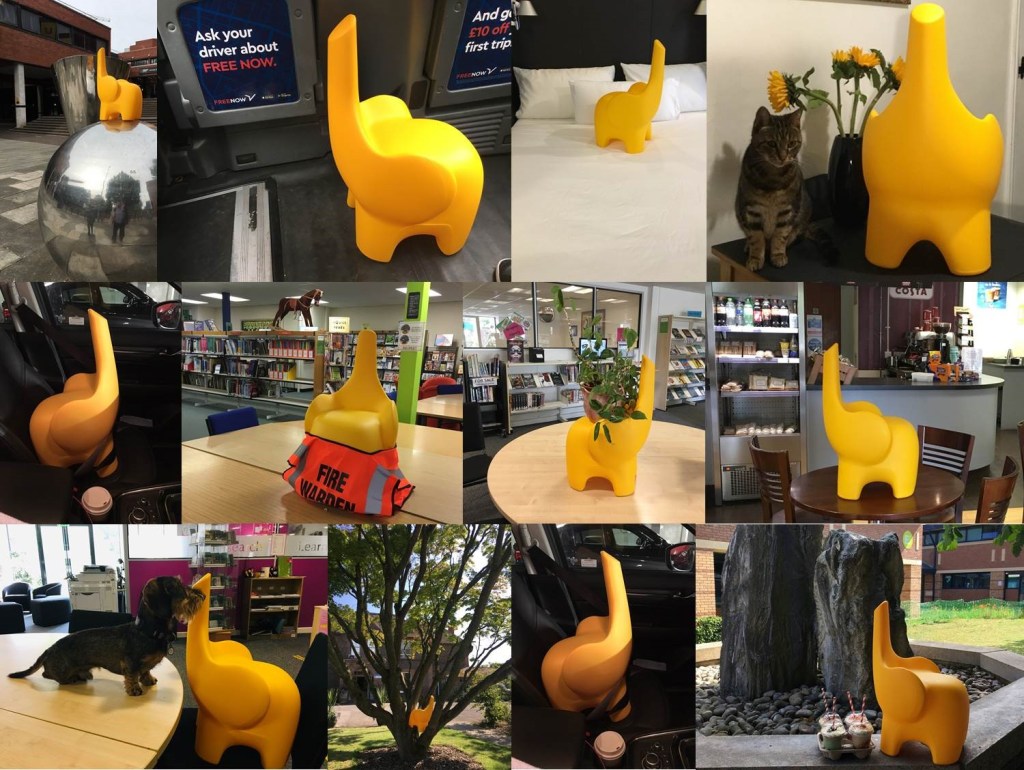
As someone who never wins anything, not only did I secure the fabulous PMLG bursary, I also won something else at conference. Whist other (I might argue, less fortunate) delegates won books, vouchers, Kindles and iPads, I was the ultimate winner… The Design Concept are the UK office of Lammhults Library Design (@designconceptuk) and, living up to their brand, they had a gorgeous stand at the conference where you could win a canary yellow elephant. It was love at first sight and I had to get him. Delegates were challenged to name the elephant and the best name transformed into ownership. Twirly is named after a keynote address by Liz McGettigan (@lizmcgettigan) at CoLRiC conference earlier this year. She declared that those in the LIS world should “turn whispers into roars;” and, so, Twirly was born.

Twirly has been living his best life

Now what?

Leaving conference, I was buzzing and felt equally angry and re-energised. I wanted to discard the passive-sofa-moaning (you know, where you watch the news, rage at the TV but do nothing) and turn my thoughts into actions by heeding the rallying cries of all the speakers and panellists I’d been privileged to hear. Below is a list of conscious actions I’ve undertaken because of my experiences and learnings at conference.

  • I’ve signed up to join CILIP’s BAME Network as an ally and passed on the details to my boss.
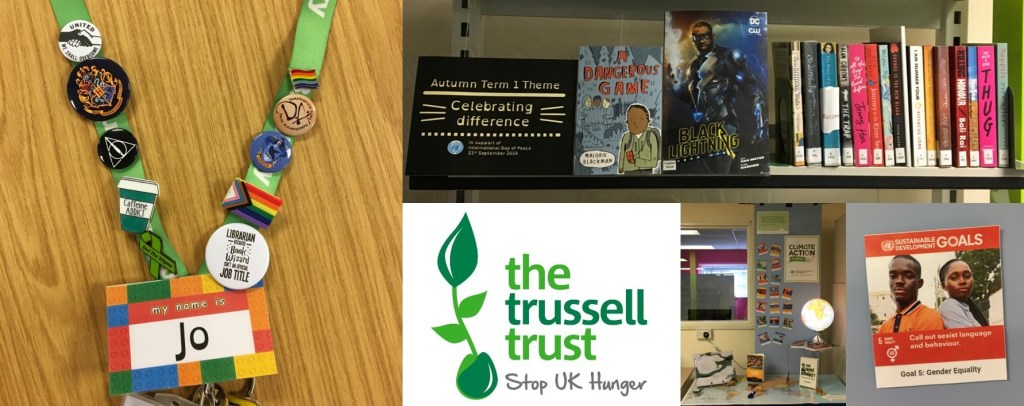
  • I’ve added a series of pins to my lanyard (and my boss’ lanyard) that demonstrate we are allies. We’re hoping our students and staff ask us what they mean or why we’re wearing them so we can start the dialogue.
  • I worked hard to diversify our fiction collection last year, with non-existent funds! Moving forward, I am committed to continue with this, mindful of BookTrust’s statistics on British book creators of colour. I will also continue the impassioned dialogue, with my organisation, about increasing the visibility of diverse fiction.
  • I’ve re-arranged our fiction / reading for pleasure collection to enable a half-termly surfacing of stock related to a theme. The first theme, celebrating difference, tied into September’s International Day of Peace. The books are written by authors or feature characters from a variety of ethnic backgrounds and cultural heritage. As the year progresses, we will use the display to highlight equality, diversity and inclusion in different ways.
  • I created a display focussed on International Day of Peace, including the UN’s sustainable development goals9. They turned them into achievable actions for individuals, so I added these to the display and challenged our students and staff to think about which they will pledge to undertake.
  • I’ve spoken to everyone I know about the lessons I’ve learned from conference – regardless of their level of interest!
  • I’ve started to call out micro-aggressions, both those I receive (last month: who is the husband and wears the trousers?) and those I see others receive (a shopper pushing a stranger’s occupied wheelchair so that he could reach a shelf). In the case of the latter, I always seek the receiver’s express permission because I don’t want to disempower anyone.
  • As a household, we’ve continued the tradition of refusing to buy or receive Christmas gifts; instead, we donate much needed items and cash to a homeless centre in Portsmouth. I’m delighted that the business support staff at work are getting behind this cause in lieu of a Secret Santa, this year.
  • I did some voluntary work for the Trussell Trust and I’ve been adding items to the supermarket collection point every month.

I know that I will get things wrong and, in trying, I could very well offend the people I’m trying to include. I need to be receptive to criticism and I must reflect on what I learn. As Shirley Yearwood-Jackman argued, many people fear that questioning the status quo will reflect poorly on themselves10; I won’t allow my worry of getting it wrong to transform into cowardice or inaction.

This is just the start…11

References (And, yes, I’m combining Harvard APA 6th with end notes… the horror!)

1. Gorman, M. (2015). Our enduring values revisited: librarianship in an ever-changing world. Chicago, USA: ALA Editions

2. Jolly, L. (2019, July 3). Librarianship and identity: professionalism in a changing world [keynote address]. Manchester, UK: CILIP Conference 2019

3. Ibid.

4. Bolton, L. & MacInnes, N. (2019, July 3). Never going underground: LGBT archive collections at Manchester Central Library [seminar presentation]. Manchester, UK: CILIP Conference 2019

5. Blake, E. (2017). The father of modern libraries was a serial sexual harasser. Retrieved July 31, 2019 from https://www.history.com/news/the-father-of-modern-libraries-was-a-serial-sexual-harasser

6. BookTrust. (2019). BookTrust represents. Retrieved July 31, 2019 from https://www.booktrust.org.uk/what-we-do/programmes-and-campaigns/booktrust-represents/

7. Lambe, P. (2019, July 4). People of the book: knowledge in our society and our role in it [keynote address]. Manchester, UK: CILIP Conference 2019

8. Sharman, K. (2019, July 3). Can Artificial Intelligence create a fairer world? [keynote address]. Manchester, UK: CILIP Conference 2019

9. United Nations. (2019). About the sustainable development goals. Retrieved July 31, 2019 from https://www.un.org/sustainabledevelopment/sustainable-development-goals/

10. Yearwood-Jackman, S. (2019, July 4). BAME Network: what it means to be an ally [seminar]. Manchester, UK: CILIP Conference 2019

11. The Trussell Trust. (2019). Logo. Retrieved July 31, 2019 from https://www.trusselltrust.org/

Books, glorious books…

In the brief interlude between the MA dissertation deadline and the PhD start date, I’ve been gorging myself on fiction. PhD induction was today so reading-for-fun may take a backseat again. I’m aware many of the ratings are high so this makes me seem easily pleased but I’d counter that I’m pretty adept at choosing books I predict I’ll like!


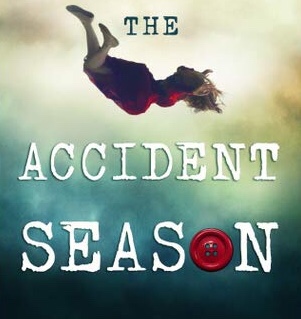
Book: “The accident season”
Author: Moïra Fowley-Doyle
Source: Waterville Libeary, Hampshire Library Service
Rating: 💖💖💖🖤🖤
Plot: Cara’s family suffer from an annual, month-long accident season which cannot be avoided. Why?
Positives: supernatural tone, unusual premise
Negatives: resolution predictability, unnecessary romance


Book: “The One”
Author: John Marrs
Source: Kindle, Amazon
Rating: 💖💖💖💖🖤
Plot: a DNA test can reveal your soul-mate. What are the consequences when your match isn’t straight forward?
Positives: blending of SciFi and crime, multiple narratives
Negatives: rushed ending for several protagonists, police officer choices seemed implausible or unlikely


Book: “The Testaments”
Author: Margaret Atwood
Source: hardback, Amazon pre-order
Rating: 💖💖💖💖💖
Plot: the collapse of Gilead, 16 years after Offred’s story comes to an end
Positives: multiple narratives, complex ethics, some back-story
Negatives: potentially confusing (in parts) to those unfamiliar with HBO series, too short!


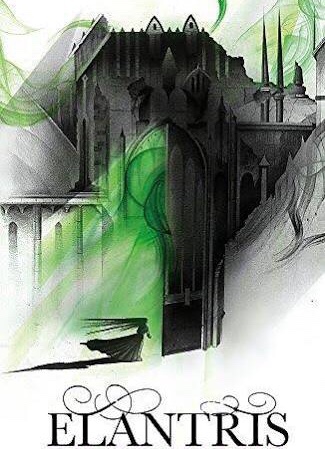
Book: “Elantris”
Author: Brandon Sanderson
Source: audiobook, Audible
Rating: 💖💖💖💖💖
Plot: a cursed city, religious colonisation and the demise of magic explosively meet in a tale of politics, strategy and the human condition
Positives: scope (worlds and politics), well explored rational vs. spiritual ethics, multiple plotlines, original
Negatives: one protagonist’s preoccupation with romance


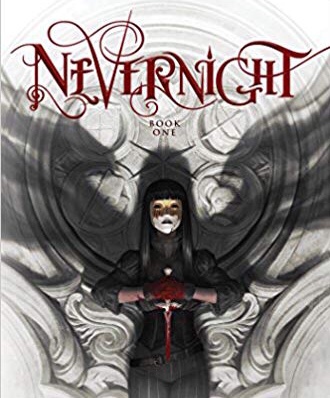
Book: “Nevernight”
Author: Jay Kristoff
Source: Kindle, Amazon
Rating: 💖💖💖💖🖤
Plot: Mia attends assassin school to avenge her family and must face her many demons (but not a YA book)
Positives: character development, syntactical style (not to everyone’s taste), brilliant librarian, description
Negatives: sex that didn’t seem to add anything


Book: “A good girl’s guide to murder”
Author: Holly Jackson
Source: paperback, Tesco (impulse purchase)
Rating: 💖💖💖💖💖
Plot: Pippa uses the EPQ (extended project qualification) during her A Levels to investigate a murder from 5 years ago
Positives: epistolary (including transcripts, notes, scanned images), twisty enough that the outcome isn’t predictable, characters are believable
Negatives: protagonist makes some leaps and assumptions which could have been better explored

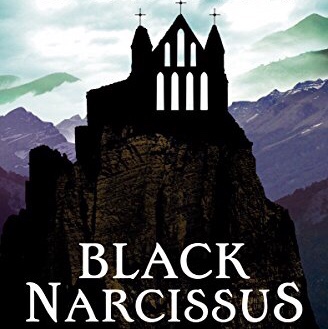
Book: “Black Narcissus”
Author: Rumer Godden
Source: audiobook, Audible (Bookclub choice)
Rating: 🖤🖤🖤🖤🖤
Plot: as far as I can tell, a group of nuns travel to the Himalayas to convert and educate the locals
Positives: …
Negatives: so racist it made me too uncomfortable to finish


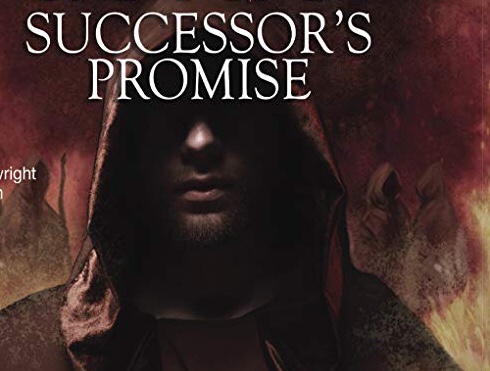
Book: “Successor’s Promise” (Millennium’s Rule, Book 3)
Author: Trudi Cannavan
Source: audiobook, Audible
Rating: 💖💖💖💖💖
Plot: The worlds reel following the demise of the Raen whilst Rielle and Tyen struggle with their own responsibilities to Qall and Vellab
Positives: detailed character development, new worlds, complex ideology
Negatives: Qall is annoying (whining teen!)

Alternative acknowledgements

It’s been a bit of a hiatus for blogging, this summer, as I’ve had the small matter of a dissertation to write. I will resume now that it’s all over (freeeeeeeeeeeedom) because I have all the early summer conferences to tell you about!

I found that when writing my MA dissertation, the most satisfying section was the acknowledgements page. This is the version that was submitted…

I wish to thank the colleges and individuals who participated in this research, particularly for their generous gift of time:

  • Chichester College Group
    • Chichester College
    • Brinsbury College
    • Crawley College
    • Worthing College
  • Portsmouth College

I am grateful to Dr Briony Birdi, my supervisor, for her unwavering encouragement and sage guidance.

This study is dedicated to my wife, Helen McKenna-Aspell, whose belief in me looks on tempests and is never shaken (Shakespeare, Sonnet 116).

Quite professional, no? I was governed by my inner, nagging voice who reminded me that whatever I wrote would be there for ever. But, if I ignored that voice and wrote a less guarded (slightly swearier) version, it would go something like this…

I wish to thank the colleges and individuals who participated in this research, particularly for their generous gift of time:

  • Chichester College Group
    • Chichester College
    • Brinsbury College
    • Crawley College
    • Worthing College
  • Portsmouth College

I’m proper proud to work for Chichester College Group and having the opportunity to speak to so many people has been a privilege. I can’t believe you all took the time and energy to support me with this when you’re so busy running the world. I’m your biggest fan. Also, we have so many rock-star female leaders who are brilliant role models for their staff and students.

I am grateful to Dr Briony Birdi, my supervisor, for her unwavering encouragement and sage guidance. Other people look up to and idolise celebrities; I’m lucky to have someone appear in my life who has inspired me to be and do better. In a non-stalker fashion, I am in awe of her and want to be like her when I finally grow up.

This study is dedicated to my wife, Helen McKenna-Aspell, whose belief in me looks on tempests and is never shaken (Shakespeare, Sonnet 116). The absolute shitshow she’s put up with for two years would have broken a weaker person. I’ve never understood why she chose me but I’m grateful, every day, that she did.

This research would not have translated from my brain to the page without the loyalty of Nespresso. There’s no one else I’d rather work with at 3 o’clock in the morning. Equally, without the support of the supervisor at Dunelm I would not have completed the MA. He made sure I was able to replace the study chair, which broke at the least convenient time, with immediate effect. He even loaded it into my car. Michael, my chiropractor, has been steadfast in his dedication to my back. There were days when I felt like I’d climbed a mountain, fought several bears, felled a tree and carried it home – and all I’d actually done was sit at the table for 19 hours straight. The man is a wizard. I must thank Laura and Rose, my Chichester College library compadres, for making me belly-laugh this summer – I mean, we also did some work but the laughter was the medicine I didn’t even know I needed. The estates team at Brinsbury College allowed me to break in on Saturdays so that I could work on a real computer in the peace and quiet. This has been a running theme – nobody said no to me! The yeses stacked up and made life just that little easier.

Some specific thanks…

  • Alessio Pruneddu: the person behind the Q-sorTouch system I used. Generous with his time and patient of my idiosyncrasies.
  • Savannah Kelly and Brian Young: their research into perceptions of library services inspired my whole study project and, when I reached out to them via email, they were incredibly helpful and gave much advice (Journal of Academic Librarianship, 44(2), 2018).
  • Virginia Braun and Victoria Clarke: the duo behind so much comprehensive and innovative material about thematic analysis, including several videos I’ve watched on repeat. Again, very generous with their time and guidance when asked via Twitter.
  • Sue Reed: Horticulture Demi-God at Brinsbury and my MA partner in crime for the year. It’s been so cathartic to have someone at work to chat to – a mutual cheerleading of sorts.

In fact, I am grateful for the people who live in my phone. I’ve reached out, often despairingly, on Twitter and I’ve been given advice about software, Q-methodology, statistics, thematic analysis, dissertation dos and don’ts. And that was just for the dissertation, never mind the MA assignments.

To all the coffee shops, the big chains, the independent cafés… my unending gratitude for offering a different location so that I didn’t succumb to the cabin fever. Some days the only highlight was escaping to Tesco for a Harris and Hoole caramel latte. Boston Tea Party will hold a special place in my heart for feeding me no less than 3 times in the week running up to submission – fabulous coffee and damn good cake.

Maggie, my English Springer Spaniel, who gave me cuddles and kept me company through the long nights… but definitely not her brother, Stripy. The cat that shat everywhere, on repeat, at the least convenient times. He’s old and we love him etc. etc. but I am not thankful for that contribution to my days and nights.

Merci, universe, for sending a pretty lame summer. Had the weather been glorious, it would have been so much harder to be stuck indoors. You can send the summer now; I’ve got time to enjoy it in September.

To my patient friends and family – thank you for letting me be AWOL without guilt. I can’t wait to spend September catching up with you, your spouses, your kids and your pets (not necessarily in that order).

And finally to the Badass Bibliophiles. The group of fellow distance learners who have become friends, agony aunts, therapists, proof-readers, comedians and around-the-clock supporters. You’re the best.

I can’t believe it’s all over. Now, just the brutally long wait to see how I’ve done.

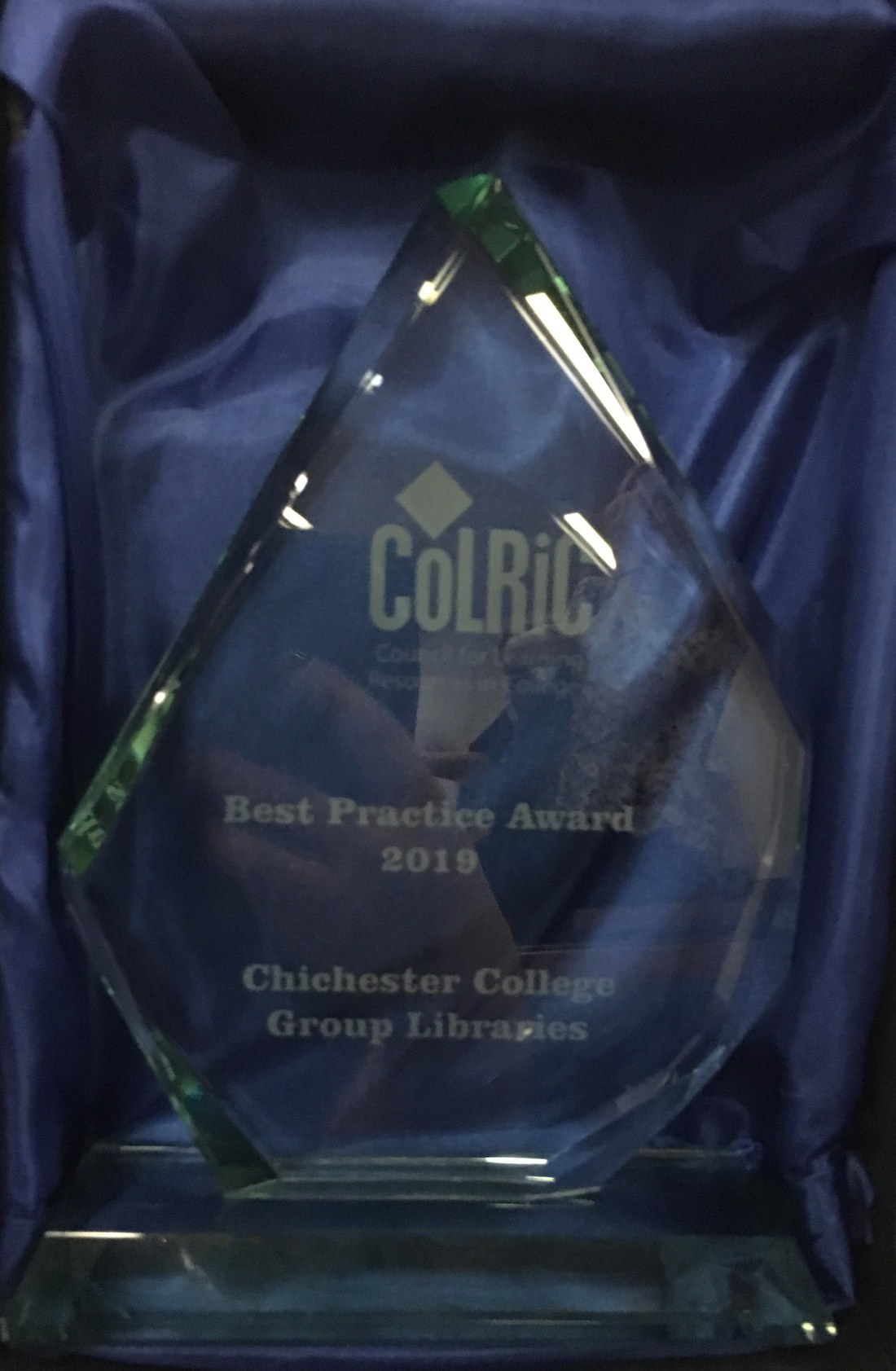
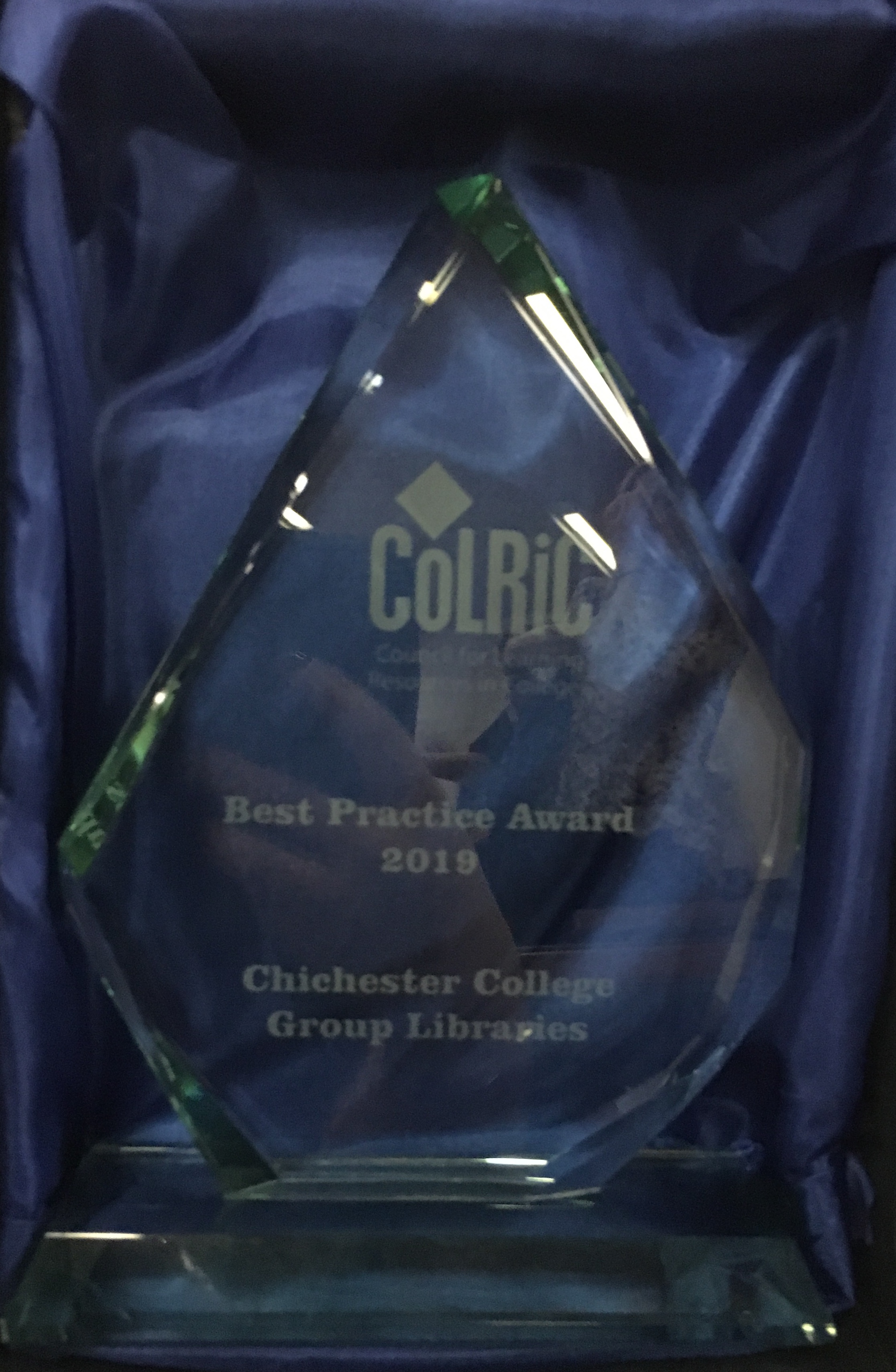
CoLRiC Best Practice Award 2019

I have never written an awards entry before and I certainly didn’t think I’d win my first attempt! CoLRiC stands for the Council for Learning Resources in Colleges and it is “an independent organisation working with library and learning resources centre managers in further education, sixth form colleges and the HE in FE sector to enhance and maintain excellence in their services” (CoLRiC, 2018). Since 2013, CoLRiC has issued Best Practice Awards to college libraries for projects and activities that have demonstrably enhanced service delivery.

Chichester College Group is comprised of four colleges, two of which provide a shared library service: Chichester College and Brinsbury College. I was asked to launch and manage a Twitter account for this shared service back in November 2018. I’ve worked closely with the whole team on this enterprise but the hard work of two, in particular, has meant that the endeavour was possible. Laura Piper, Library Assistant and dog whisperer from Chichester College and Rose Hull, Business Apprentice and creative genius, also at Chichester.

Floor selfie with William the WonderDog

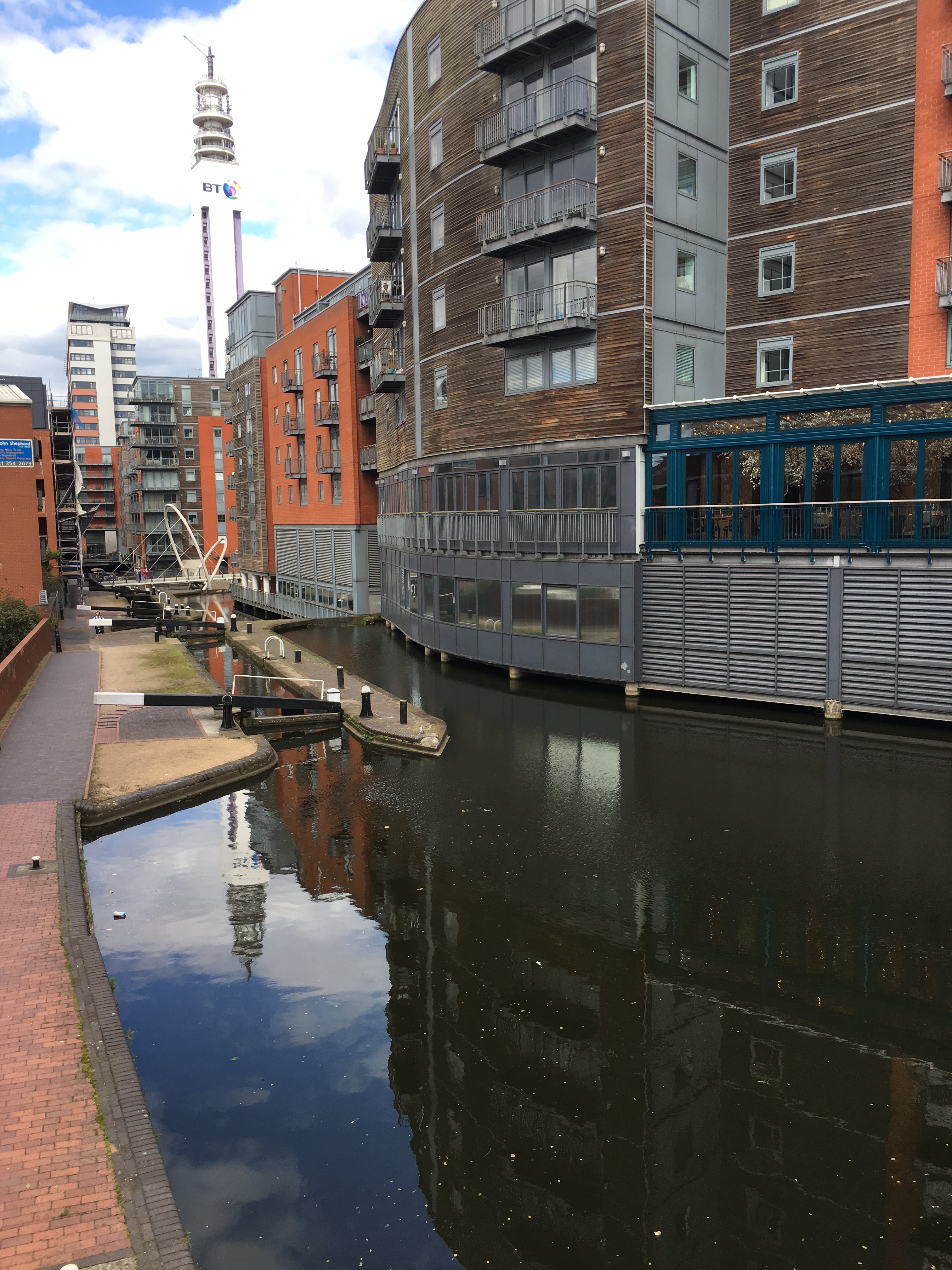
As winners, we received a gorgeous trophy, £150 to spend on the libraries and a place to attend CoLRiC’s annual conference. This year, the conference was held at University College Birmingham and I attended with the College Librarian.

When receiving the award, it is expected that you will showcase your submission in a five minute presentation. I’m going to share that presentation in this blog because it explains why and how we’ve used Twitter.

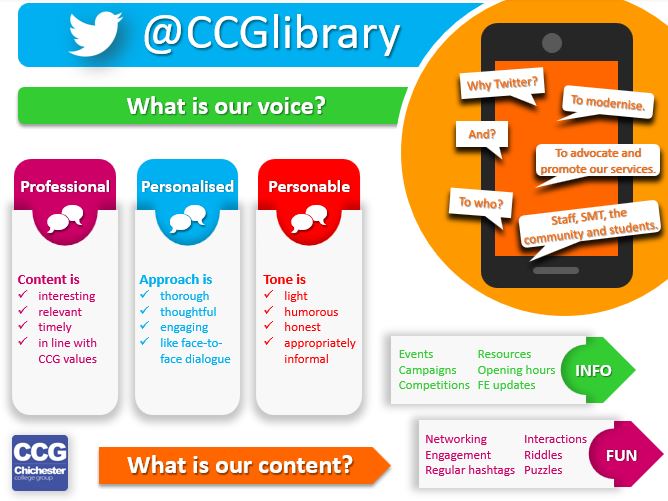
Why Twitter? This is a good question. We wanted to advocate and promote our services within the college to staff and the senior team. We wanted to make connections to the wider community – both geographically and in the library and FE worlds! When establishing a corporate social media presence, it was imperative we presented a clear and consistent voice. Professional, personalised and personable – our Twitter account is a literal extension of who we are in the physical libraries. This voice underpins our content, approach and tone. In terms of the content, we aim to be both informative and fun.

Laura and I produced this simplified policy after experimenting with Twitter in the autumn term and looking at best practice. In addition to the grand aims and respectable ideology of the policy, we also created a more grounded and concrete set of house style guidelines. Or, more simply put, dos and don’ts. After all, librarians love a list! The detail has helped to empower everyone to participate regardless of confidence or prior experience.

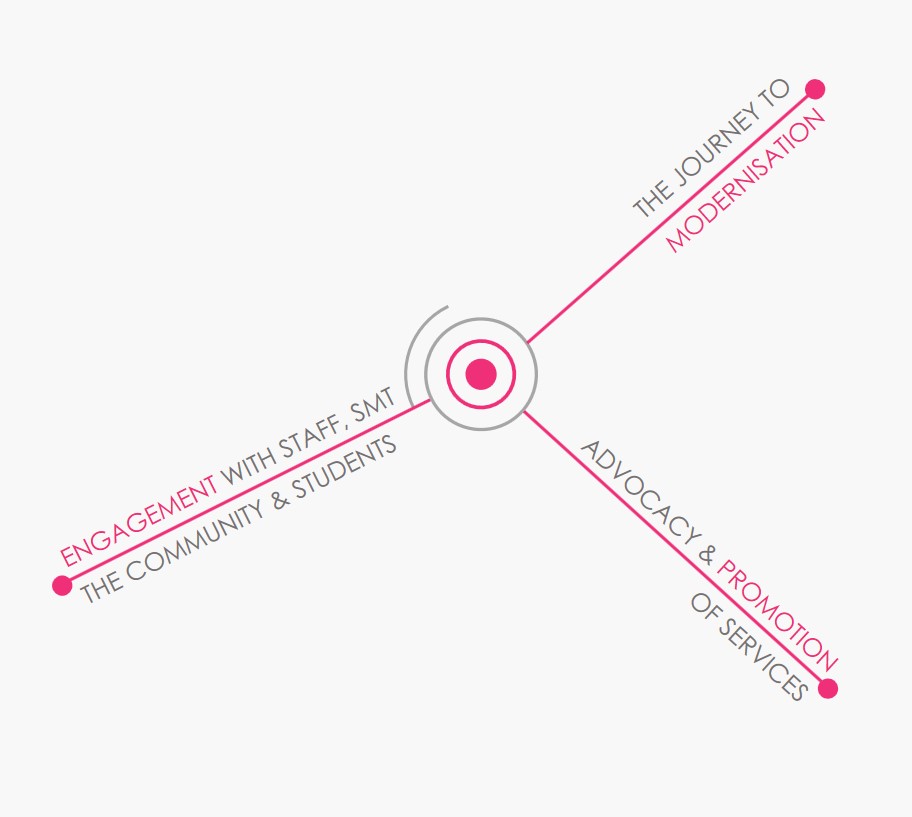
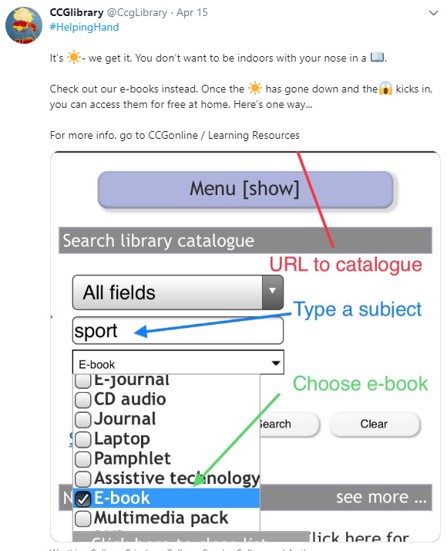
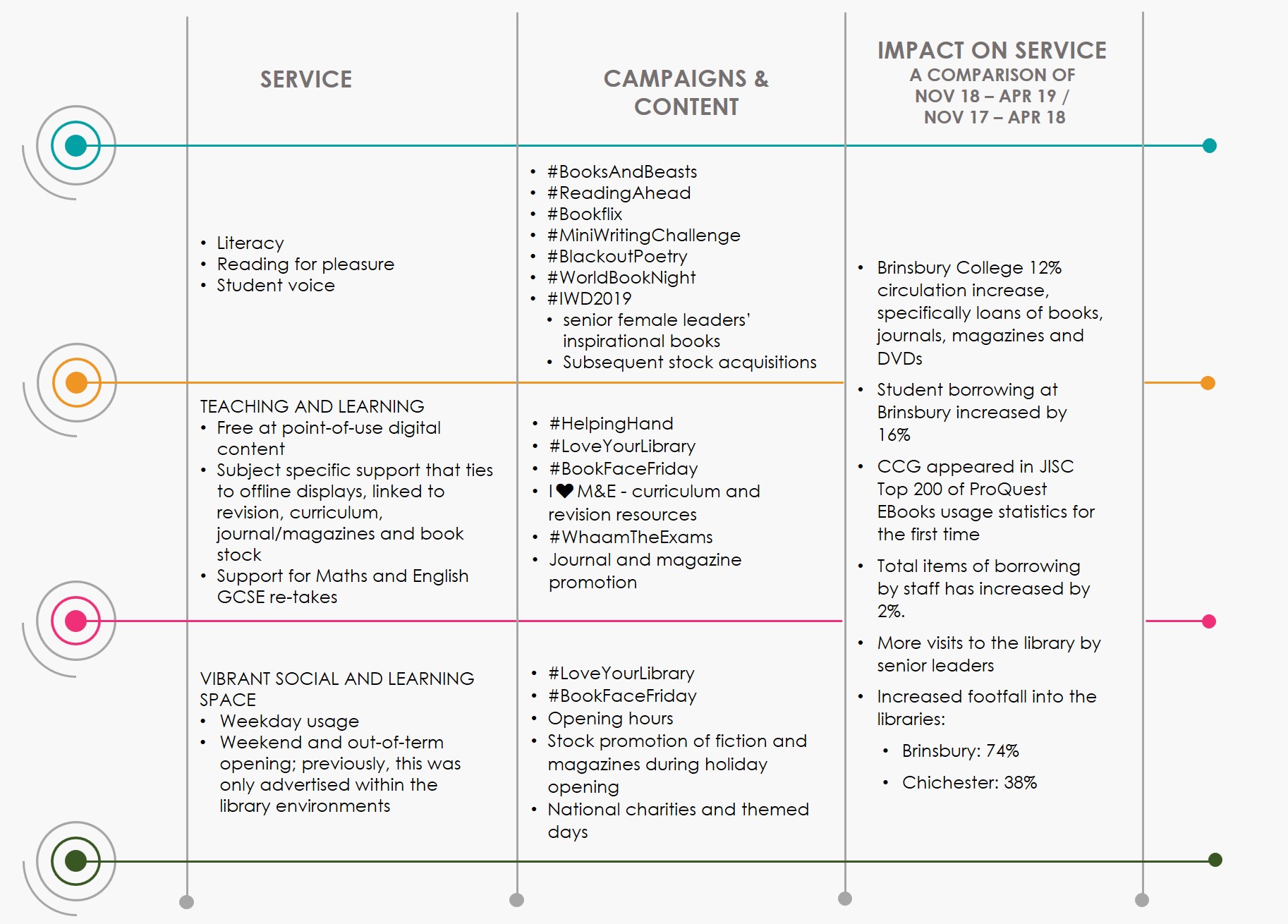
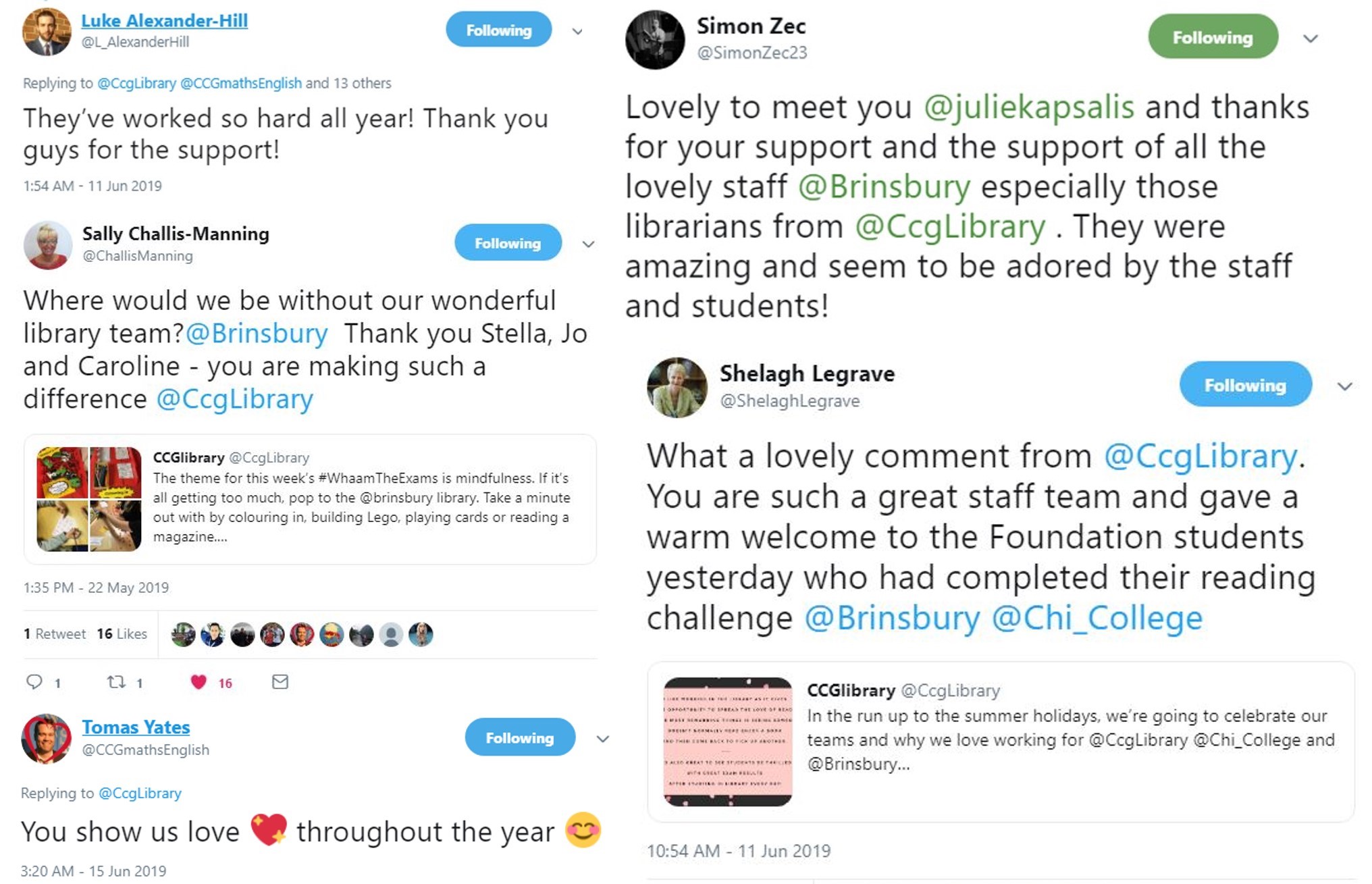
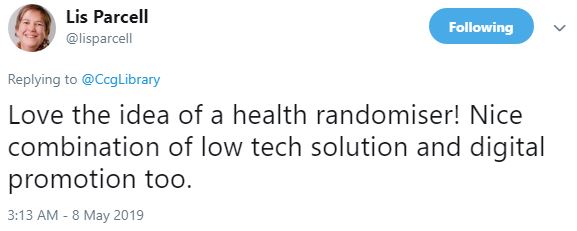
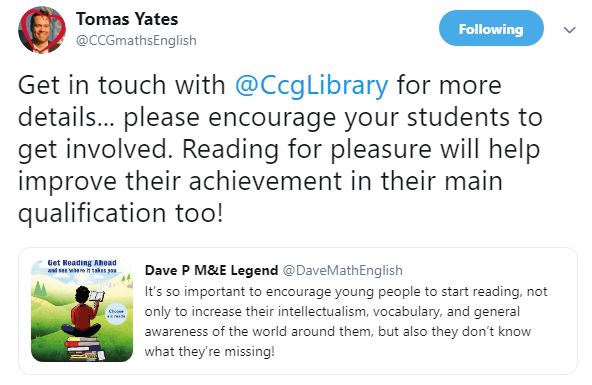
I’m going to take you on a little whistle-stop tour of some of our content and campaigns. Each was designed to support one of our three core aims: modernisation, service advocacy and promotion and engagement with the college group’s senior team, staff and the wider community. I appreciate that screenshots of Twitter might not translate brilliantly to a blog; you can of course follow us for a better look! It’s @CCGLibrary and, yes, this is a shameless plug for followers.

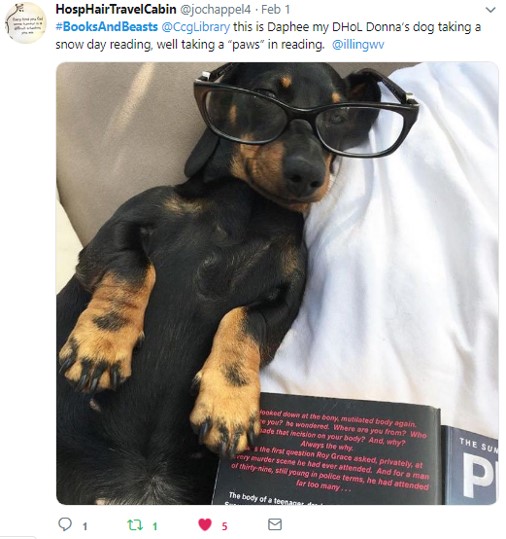
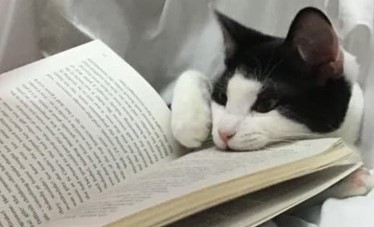
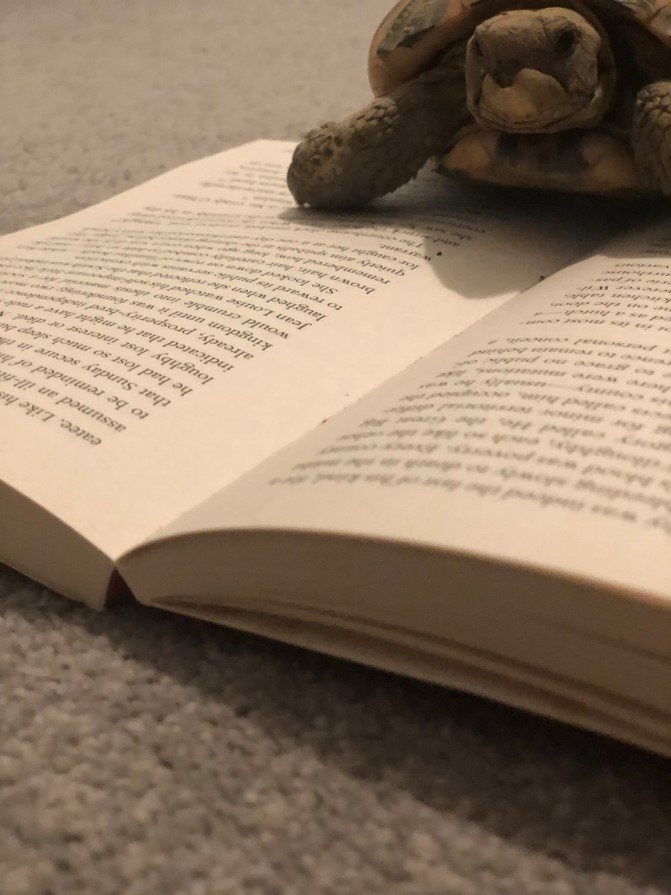
We linked this year’s Reading Ahead scheme to the hashtag #BooksAndBeasts, asking students and staff to catch their pets reading. Reading Ahead is a national campaign led by The Reading Agency, focused on encouraging reading for pleasure and improving adult literacy. Using animals really helped to break down barriers; as Brinsbury is a land-based college, we already have an animal-mad audience. We also used the Twitter-generated content to market the campaign around campus… pictures of animals reading popped up on photocopiers, in cafés and on toilet doors. It worked – we had a record number of participants!

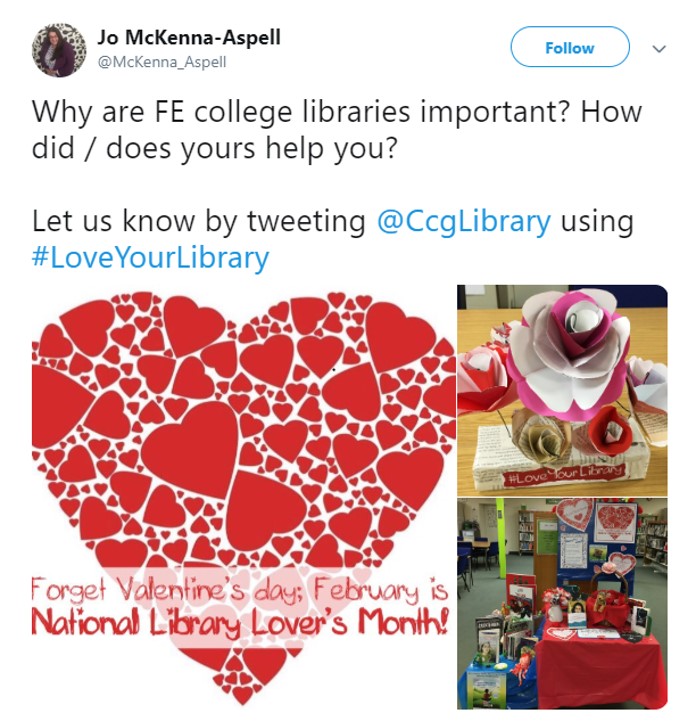
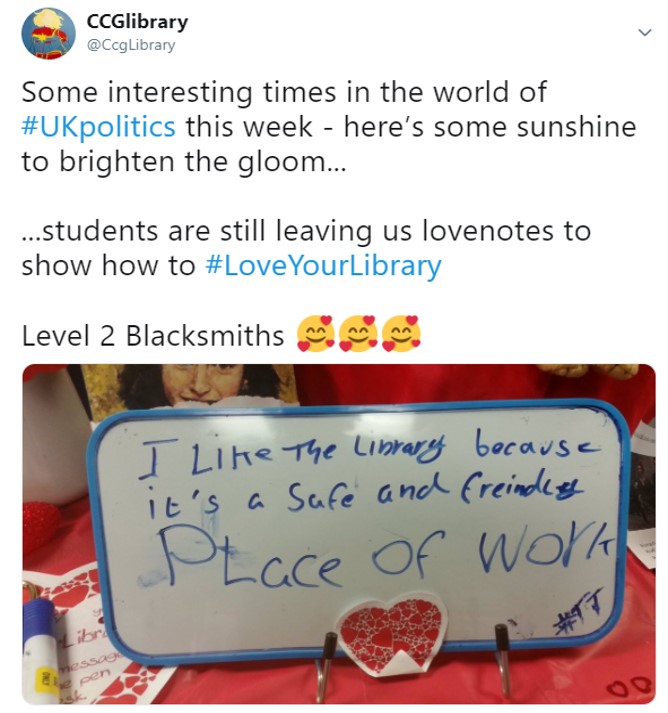
Love your libraries was a month long, overarching campaign that pulled together multiple activities such as the launch of Reading Ahead and our annual student survey. It helped to promote the role that the libraries and staff can play in the student experience. The library and other spaces around campus were decorated with handmade roses and other frivolities. Students (and staff) left the library love-notes and we shared these on Twitter. A tangible impact of the campaign was an even stronger link to the GCSE English Department for Reading Ahead and other projects.

Earlier in the year, William the Wonderdog became our newest librarian. He is a qualified therapy dog and Laura is his handler. I could easily use the rest of the blog to explore how he has impacted the library and our service offer through the power of belly rubs but back to the business at hand… we used Twitter to connect William to the college group and wider community. Advertising his presence on Twitter meant staff, in turn, advertised it to students. He’s gathered quite a following both online (@WSnosidge) and on campus. His Twitter presence has also helped to promote services and stock.

The weekly Mini Writing Challenge is a bit of fun rooted in word play and literacy. Participants have included students, staff, departments, other libraries, other colleges and even writers like Michael Rosen and Michael Grant. We run a number of weekly features like this, designed to engage with communities within and beyond the college: some promote stock, some advocate reading for pleasure, some encourage debate.

On a more serious note, we also use Twitter to advertise our services. We know the students aren’t looking at Twitter but their teaching staff and personal tutors are! By surfacing stock, promoting digital resources and advertising opening hours on Twitter, it reminds the staff and the senior team of how the library can support them in delivering outstanding learning outcomes. It is no coincidence that our e-book borrowing rates are up or that our weekend footfall has increased since we launched Twitter.

We believe one of our mandates is to help students to broaden their minds and experiences; Twitter helped us to achieve this. Here’s an example. Following a staff recommendation, we purchased a poetry book written by a local poet. This led to an online dialogue with the poet, Simon Zec, that ultimately resulted in:

  • a celebration of World Poetry Day;
  • a blackout poetry competition with more than 70 entries;
  • a poetry event in the library attended by students, senior management and staff, led by Simon – who also judged the competition.

The impact of our Twitter account isn’t measured in likes, retweets, followers or engagement, although I am obsessed with them and they have all demonstrated positive upward trends.

The impact isn’t really reflected by our increased book borrowing, footfall or e-book usage, despite the fact I can evidence these.

The impact is really more qualitative and can be found in the comments others make about our service: to us, about us and in the public domain.